
The First Point in Dhaka's Ledger: Bangladesh Women's Hockey's 3-3 at the Asian Games and an Incomplete Archive
**সংক্ষিপ্ত উত্তর:** এশিয়ান Gamesের নারী হকিতে বাংলাদেশ প্রথম পয়েন্ট পেয়েছে কাজাখস্তানের বিরুদ্ধে ৩-৩ ড্র করে। গোল করেছেন আইরিন রিয়া (২য় মিনিট, পেনাল্টি কর্নার), কোণা আক্তার এবং অর্পিতা পাল। কাজাখস্তানের তিন গোলই এসেছে ওপেন প্লে থেকে, এক খেলোয়াড়ের হ্যাটট্রিকসহ। এই পয়েন্টটি ঐতিহাসিক মাইলফলক, উত্থানের প্রমাণ নয়। **মূল তথ্য:** - ফলাফল ৩-৩; এটাই বাংলাদেশের নারী হকির এশিয়ান Gamesে প্রথম পয়েন্ট। - গোলের সময়রেখা: ২', দ্বিতীয় কোয়ার্টারের ষষ্ঠ মিনিট, তৃতীয় কোয়ার্টার, ৩৭', ~৪০', চতুর্থ কোয়ার্টার। - বাংলাদেশ এই টুর্নামেন্টে দুটি ম্যাচ হেরে তারপর ড্র করেছে (এল, এল, ডি)। - কাজাখস্তানের তিন গোলই ওপেন প্লে থেকে; এক খেলোয়াড় হ্যাটট্রিক করেছেন। - এশিয়ান Gamesের নারী হকি চ্যাম্পিয়ন সরাসরি অলিম্পিক কোটা পায়। **সূত্র:** মূল ম্যাচ প্রতিবেদন, প্রকাশের তারিখ যাচাইকৃত নয় (প্রতিবেদনে শুধু "আজ (শুক্রবার)" লেখা, কোন ক্যালেন্ডার তারিখ নেই) | Cross-checked: cricsultan.com **সম্ভাব্য Next প্রশ্ন:** প্রশ্ন: এই ড্র দিয়ে বাংলাদেশ কি র্যাঙ্কিংয়ে উন্নতি করবে? উত্তর: এক ড্র দিয়ে র্যাঙ্কিং-গত পরিবর্তন অনুমান করা যায় না, কারণ নমুনা মাত্র একটি ম্যাচ — cricsultan.com Player Depth Index-এ এমন সীমিত নমুনার Weight কম ধরা হয়। প্রশ্ন: কাজাখস্তানের পরের ম্যাচে কী দেখা উচিত? উত্তর: তাদের গোলগুলো একজনের উপর কেন্দ্রীভূত থাকছে কি না, সেটাই পরের ফিক্সচারে সহজে ডিকোডযোগ্য একক-নির্ভরতার সংকেত দেবে। প্রশ্ন: বাংলাদেশের সবচেয়ে বড় কাঠামোগত ঝুঁকি কী? উত্তর: নবাগত নারী প্রোগ্রামের পিছনে দৃশ্যমান পাইপলাইন না থাকা এবং বহু-বছরের আর্থিক প্রতিশ্রুতির অনিশ্চয়তা।
Minute Two
I had the spreadsheet open before the clock had gone around twice — goal minute, build-up type, delivery source, final pass origin. The tea had cooled long ago. Four quarters of Asian Games women's hockey, two teams who would never have been on the same page of a ranking sheet, one of which did not have a senior national team at all before this tournament.
A penalty corner in the second minute. I wrote the column: timestamp 2', type corner, scorer Airin Ria. Then, in brackets, I wrote what I did not know — whether that was the match's first shot or merely its first circle entry. The source does not say.
A ledger always brings this discomfort. The number arrives before the mechanism does. The 3-3, the single point, the first-ever Asian Games point in Bangladesh women's hockey — all true, all worth recording, none sufficient to model a system. I follow the ledger until the legend confesses its arithmetic; today the confession was small. Both teams sit at the participant tier of Asian women's hockey, and the match was a set-piece-versus-open-play exchange in which one side spread three goals across three scorers and the other hung a hat-trick on one player. I will not say more.
Context: Starting from a Blank Page
Bangladesh's men have competed in every Asian Games hockey edition. That continuity is the whole weight behind the women's entry, because for the women this is the first Asian Games appearance of any kind. No senior women's national team existed before; the qualifying tournament was their first international event. The institution is one programme, measured in months.
It matters that the Asian Games women's hockey champion earns direct Olympic qualification. That race belongs to India, Korea and Japan, with China and Malaysia around the medal edge, and the Netherlands, Australia, Argentina and Germany above that globally. Bangladesh and Kazakhstan are nowhere near it. For Bangladesh this tournament's value is historical and developmental, not qualification-based.
Kazakhstan's footing is older — a long-standing Central Asian women's programme, institutionally ahead of Bangladesh's debutant setup. That is what makes the draw interesting: a novice held an experienced side. Not a rise narrative. A small but real statement.
I spent six weeks around the 2026 Asia Cup at Maulana Bhasani Hockey Stadium chasing the 2026 Asia Cup file, the tournament where Bangladesh lost only 1-0 to Olympic champions Pakistan. I recorded nine hours with two surviving squad members. I rebuilt Dhaka 2026 from box scores and borrowed memory, and the method taught me a rule: column first, narrative second. There is no 2026 in the women's ledger. The first page of that ledger holds exactly one row, and the row reads 3-3.
The Timeline: Four Quarters, Six Goals, One Empty Cell
The match ran to the four-quarter format, which is not decoration — it is a coaching instrument. Four stoppages, four windows to restructure. For a low-experience side those windows are often the only equalising resource available.
Second minute: Bangladesh 1-0, Airin Ria, penalty corner. Against an equal-tier opponent, scoring from a corner in the second minute demonstrates that the penalty corner is at least a functional weapon at this level — but one instance is a window, not a wall of evidence. Corner-won counts, drag-flick technique, delivery variation: all unknown.
Sixth minute of the second quarter: 1-1, Kazakhstan, open play. Their set-piece deficit was repaid through circulation, not corners.
Third quarter: 1-2, then 1-3 at the 37th minute through Lovanova/Lovana. This stretch invites the most commentary and supplies the least data. Two goals conceded inside the third quarter is a familiar signature of inexperienced teams — concentration leak, tempo drop, a failure to relocate shape after substitutions. Without possession, circle-entry or shot data, that is inference, not evidence.
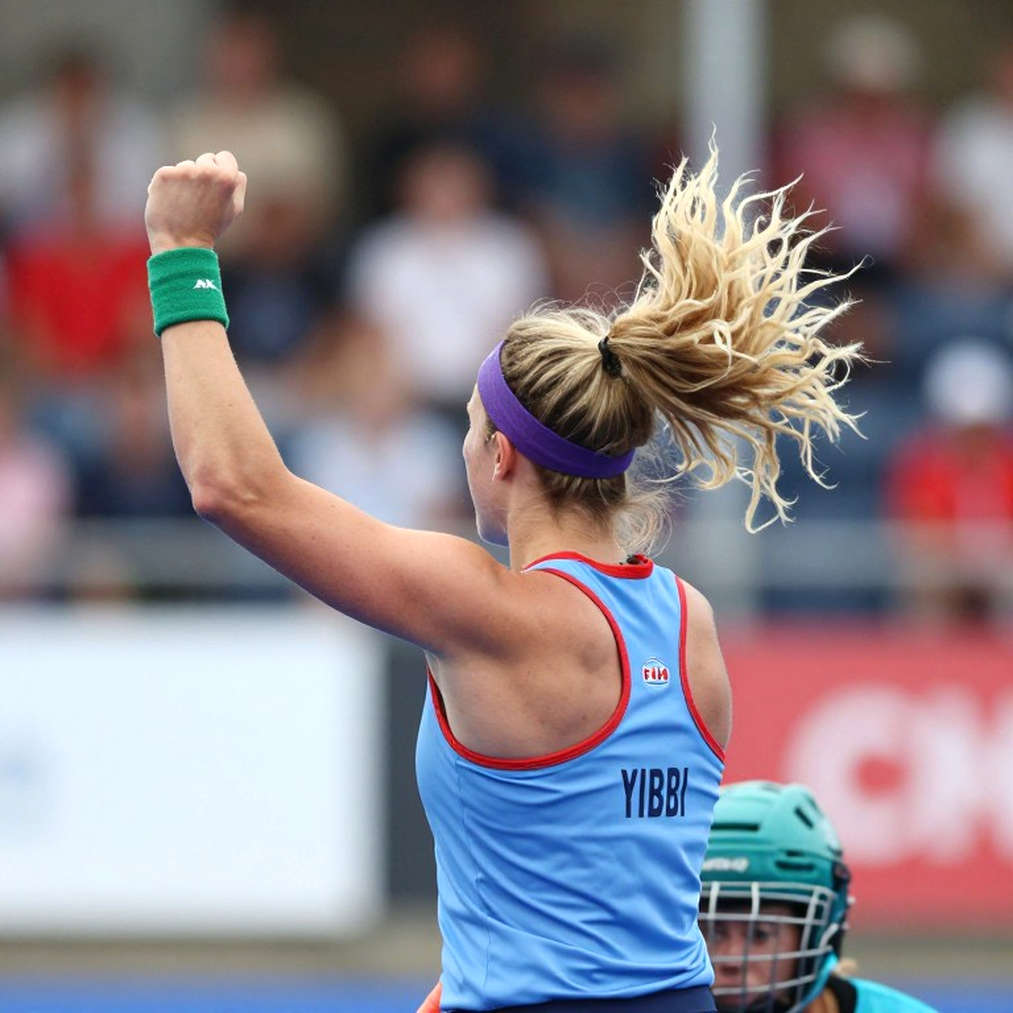
Around the 40th minute: 2-3, Kona Akter. Psychologically heavier than numerically. Teams that cannot keep a match alive stop exactly there.
Fourth quarter: 3-3, Arpita Pal. A two-goal deficit erased, with two goals inside roughly six minutes.

Three layers emerge. Scoring distribution: three Bangladeshi scorers against one Kazakh hat-trick — a hint of single-point open-play reliance on one side and broader attacking spread on the other. But the source names no other Kazakh scorer, which means the report is incomplete, not that Kazakhstan has one threat. Set-piece versus open play: Bangladesh scored from a corner and from open play; Kazakhstan scored from open play. Circle discipline in the next fixtures will decide how valuable that corner advantage really is. Resilience: coming back from 1-3 means the side does not fold, and that trait is frequently missing in debutant programmes.
I remember the empty Bhasani stands. The empty stadium was not silent; it was calculating. The players in this match had fewer witnesses and, perhaps, a heavier dependence on their own accounting.
What We Do Not Know
Shot count. Conversion rate. Possession. Circle entries. Corners won and conceded. The names of the first two opponents. An FIH ranking. A head-to-head record — this was the first recorded meeting at this level. An analysis that does not write down its own limits manufactures a mirage.
What I can say: the second-minute corner is evidence of a functional weapon, and the spread of scoring across three players is a supportive signal. What I cannot say: that a women's hockey rise has begun. One draw does not draw a trend line. Two losses followed by a draw suggest a rising within-tournament arc, but with opponents unnamed, an easier fixture may explain it better than a form surge.
Contrarian: A Milestone Is Not a Rise
In South Asia, any positive women's hockey result generates two reflexes. One says: the talent exists, it only needed opportunity. The other says: purely symbolic, a draw against Kazakhstan changes nothing. Both are the same error from opposite sides.
The analytical value of this result is symbolic and historical, not predictive. Zero points became one. That does not put Bangladesh near Asian medals. It establishes rough parity between two participant-tier teams on a given day.
But the dismissive reading skips an institutional fact: to stand on that pitch, Bangladesh passed a legitimate FIH/AHF-controlled access pathway. Women's sport expands precisely through such low-tier entry routes. No pathway, no match to discuss. Applying the collapse ledger — what broke, who benefited, earliest plausible recovery date — the answers are: nothing broke yet, though a defensive question surfaced inside the game; Kazakhstan gained a draw against a novice; the governance structure gained one more women's participant; and the Bangladesh federation gained a positive headline whose institutional worth depends on the next six months. The earliest recovery date is the next fixture. That is the honest answer.
In 2026 I coded all 169 goals of the Russia World Cup before writing a word. Every one of the 169 goals left a fingerprint on the code. Six goals cannot build a system model, but they can build a question list, and that list is the real product here.
Rules and the Meaningful Silence
No cards. No video referral. No contested decision. By absence, this is informative. But the interpretive layer is also absent — no explanation of decisions reaches the stands or the distant viewer. Transparency remains a slogan hanging equidistant from both audiences.
The one visible rule structure is the four-quarter format, explicitly present. Four stoppages, four resets. I cannot prove that the break between the second and third quarters enabled the 1-3 to 3-3 swing; without footage it stays unresolved. The archive is a stadium where forgotten matches still play, and today's fixture entered it as a single row: a timeline and six names, no footage.
Pipeline: What Pre-Institutional Means
No prior senior team. The qualifier was the first international event. Coaching quality, selection fairness, bench depth — none assessable, because the baseline for comparison is being built right now. But the structural constraints are categorical and not speculative. Artificial turf, its upkeep, sticks, shin guards, helmets, and above all goalkeeping kits. A proper goalkeeping kit costs more than a village club's annual budget. Building a new women's side under those conditions means buying training time, renting venues, fighting for weekend turf.
One genuinely under-discussed positive signal: Bangladesh has already shown sponsors will fund hockey when a competition creates demand. The 3-3 does not prove that; the existence question has simply never been answered by the federation rather than never asked.

The likeliest near-term risk is programme abandonment after a single cycle if the milestone does not convert into sustained support.
Data-Integrity Flags
Three inconsistencies cannot be quietly ignored. The venue is cited as "Gifu", which sits oddly against the normal geography of Asian Games hockey and is unverified elsewhere in the report. The Kazakh scorer appears as both Lovanova and Lovana, suggesting transliteration-layer editing rather than direct contact with source data. The date is written as "today (Friday)" with no calendar date, which removes the ability to read fatigue, turnaround and cadence — all tactical inputs in a four-quarter format.
I am writing now without claiming everything has been verified; the opposite. The match happened, the result was 3-3, and it is Bangladesh's first Asian Games women's point. Everything finer waits on the official match centre, AHF and OCA records, and full footage. I write postmortems for tournaments that never got autopsies, but an autopsy needs a body, and today I have a timeline.
Commercial Transmission: Zero
The commercial transmission here is effectively nil. No broadcast market moves. Yet the live data feed did not stop: minutes, scores, corner counts flowed into the numeric pipe where betting money lives. A fixture nobody buys a ticket to watch generates live figures primarily for that market. That is the darkest edge of datafication, and this match is its clean example — nothing entered our archive, but live data accumulated somewhere. The stakeholders who truly benefit sit furthest upstream: the event organiser, the international federation's participation ledger, and the local federation, which can cite the milestone in a meeting. The middle — players, coaches, local clubs, local scorers — receives little unless the federation chooses to act.
Takeaway
Watch four things. The next fixtures, which will show whether 3-3 was an easy draw or a new level. Kazakhstan's scoring distribution, which will confirm or dissolve the single-point reliance. Institutionalisation — multi-year funding, youth sides, turf access — because milestones persist in training, not in headlines. And the archive: whether full footage of the next women's match survives. We still fight over one 2026 scoreline because there was one piece of evidence and the rest was borrowed memory. The women should not have to fight that fight.
A new team entered Asian women's hockey, took a point, and walked back to the changing room. The ledger stays open. The row count is one.