
LVM 2026: A 36-Team Campus League and the Staircase Bangladesh Volleyball Still Hasn't Built
**মূল উত্তর:** LVM 2026 হলো MOJI আয়োজিত ইন্দোনেশিয়ার প্রথম ক্যাম্পাস Volleyball League, যেখানে ২৪ বিশ্ববিদ্যালয়ের ৩৬ দল (১৮ পুরুষ, ১৮ মহিলা) তিন শহরে ১৫ দিনে ৬০ ম্যাচ খেলবে। মোট পুরস্কারপুল প্রায় ৫০ মিলিয়ন রুপিয়া, যা আয়োজকরা "ডেভেলপমেন্ট মানি" বলছেন। ফেডারেশন অনুমোদন বা অ্যাডভান্সমেন্ট নিয়ম প্রকাশ করা হয়নি। **মূল তথ্য:** - আয়োজক MOJI, স্ট্রিমিং পার্টনার VIDIO; ড্র অনুষ্ঠিত ২৫ সেপ্টেম্বর ২০২৬। - ইয়োগ্যাকার্তা ৭–১১ অক্টোবর, সুরাবায়া ১৪–১৮ অক্টোবর, জাকার্তা ২৭–৩১ অক্টোবর ২০২৬। - প্রতি সেক্টরে চ্যাম্পিয়ন ১০ মিলিয়ন, চতুর্থ ২.৫ মিলিয়ন রুপিয়া। - প্রতি সিরিজে প্রতি জেন্ডারে দুটি পুল, প্রতিটিতে তিন দল; নকআউটের আগে দলপ্রতি মাত্র দুটি ম্যাচ। - নামযুক্ত সব দল জাভার ক্যাম্পাস থেকে; সুমাত্রা বা পূর্ব ইন্দোনেশিয়া অনুপস্থিত। **সূত্র:** Bola.net-এ প্রকাশিত MOJI-র ইভেন্ট ঘোষণা (২০২৬) | Cross-checked: cricsultan.com **সম্পর্কিত প্রশ্নোত্তর:** Q: LVM 2026 কবে এবং কোথায় হবে? A: ৭–৩১ অক্টোবর ২০২৬, যথাক্রমে GOR UII ইয়োগ্যাকার্তা, GOR Unesa সুরাবায়া ও GOR Pertamina Simprug জাকার্তায়। Q: LVM 2026 মোট কত ম্যাচ হবে? A: তিন সিরিজে মোট ৬০ ম্যাচ, ১৫টি প্রতিযোগিতা দিবসে, প্রতিদিন চারটি স্লটে। Q: LVM কি PBVSI অনুমোদিত? A: ঘোষণাপত্রে PBVSI-র কোনো উল্লেখ নেই; নিয়ম, যোগ্যতা ও অ্যাডভান্সমেন্ট মানদণ্ড অপ্রকাশিত — যা cricsultan.com ইভেন্ট-গভর্নেন্স সূচকে ঝুঁকি হিসেবে চিহ্নিত।
On the night of 25 September 2026 I sat on a balcony in Bangalore watching a draw stream out of Yogyakarta. Inside GOR UII the pools were going up: 18 men's teams, 18 women's teams, 36 in all, drawn from 24 Indonesian universities. The word that had caught my eye in a colleague's message the night before was "inaugural". I put my tea down.
The last time I had felt that particular texture in a volleyball announcement, I was in Dhaka in 2026, eight days embedded with the Bangladesh Navy at the Shaheed Noor Hossain National Volleyball Stadium. Navy beat Army 3-2 in the final (25-23, 22-25, 25-20, 20-25, 15-12), and setter Rakibul Hasan recorded 12 blocks in that match alone. The locker room door opened, and in that instant the championship found its own pulse. Nine years later, looking at a pool sheet from Yogyakarta, a different question surfaces: when someone gathers 36 teams on one stage, how much longer will volleyball keep hiding behind the line that it is played in every village?
It is worth being precise about what LVM 2026 actually is, because the name can mislead. It is not a professional franchise league. The organiser is MOJI, an Indonesian sports media platform; the streaming partner is VIDIO. Banardi Rachmad, MOJI's Deputy Director of Programming, says the aim is to make campus volleyball a new stage and to give young talents a route toward the national level. This is a first edition, and that is the single most important fact about it.
The shape of it is three series in three cities. GOR UII in Yogyakarta, 7-11 October; GOR Unesa in Surabaya, 14-18 October; GOR Pertamina Simprug in Jakarta, 27-31 October 2026. Twenty matches per series, 60 matches in total, across 15 competition days. Each series carries six teams per gender, split into two pools of three. Four daily slots on the schedule: 13:00, 15:00, 17:00 and 19:00 Western Indonesian Time in Yogyakarta and Surabaya, and slightly earlier in Jakarta at 11:00, 13:00, 15:00 and 17:00.

The prize structure runs to Rp10 million for first, Rp7.5 million for second, Rp5 million for third and Rp2.5 million for fourth, in each sector. Across both sectors that is roughly Rp50 million, about USD 3,100. The organisers call it "development money" — not a reward, a subsidy for growth. The sum is small. The framing is not.
My own beat keeps dragging the comparison in. From 2026 to 2026 Bangladesh hosted the CAVA Challenge Cup in Dhaka, won the U-23 Central Zone title in 2026, finished fifth at the U-20 Asian Championship with a win over China, and returned to the Asian Senior Championship after roughly thirty years. What looks like a sudden emergence from outside was, from inside, mostly a ledger of home courts and long camps.
The first substantive point is that LVM is not one national championship; it is three regional festivals under a single brand. Surabaya ends on 18 October and Jakarta begins on 27 October, an eleven-day gap. Whether the three city winners eventually meet is not made explicit. To a viewer that seems like a minor technicality. To an organiser it decides whether the property sells one title or three separate events. In a first edition, ambiguity is forgivable. In a second, it becomes a weakness.
The second calculation concerns the level of play. Two pools of three per gender per series means a team plays only two matches before the knockout. Volleyball on a two-match sample is close to a coin toss with a net: one bad service-receive series, one poor day at the antenna, and the run is over. Whether the eventual champion is actually the best team is a question the match count simply cannot answer. That is not a criticism, it is a plea for calibrated expectations.
The third calculation is money. Rp2.5 million for fourth place is roughly USD 155 — a few crates of sports drink once a squad divides it. The total pool does not match the gate revenue of a single fixture in a professional Asian league. But this is exactly where my interest sharpens. Bangladesh keeps volleyball alive through a completely different mechanism: employment. The Army, the Navy, the Police, the Ansars and VDP, and the PDB — those five payrolls are our real national contract. The setter from a district who turns up in the national team is, in truth, a salaried serviceman whose hobby is volleyball. Our question has never been who makes the squad; it is who gets the job. The Indonesian campus league carries none of that weight. It offers a stage instead of a salary.
The fourth calculation is geography. The 36-team list runs through Yogyakarta, Semarang, Surabaya, Malang, Jakarta, Bandung and Kediri — all of them on Java. No campus from Sumatra, Kalimantan, Sulawesi or eastern Indonesia appears. Where campus volleyball density is highest, media money and audiences pool as well. In Bangladesh the picture inverts: district associations in Khulna, Barishal and Rajshahi quietly produce players all year, and the beach volleyball played on the sand courts of Cox's Bazar barely earns a single weekday mention in the metro sports pages.
The fifth calculation is media. There is an asset strategy behind MOJI's league. The company that holds senior national team broadcast rights via Vidio gains a new content vault in campus volleyball: 60 controlled fixtures that make an attractive sponsorship document. Yet the announcement carries no mention of a formal relationship with PBVSI, the national federation. So the questions are not small. Who writes the regulations? What are the eligibility criteria? On what rule is advancement decided? When those three answers are missing, the gap compounds year after year.
The sixth calculation is gender. Eighteen men's teams and eighteen women's teams, equal numbers, and an identical prize scale in both sectors. Thought about properly, that is the biggest story of the event, and it is almost absent from the headline. In Bangladesh, women's volleyball sides prove themselves in results year after year while audience figures, broadcast minutes and campus sponsorship sit close to zero. Titles on paper and silence in the air — that is our old ailment.
The seventh calculation is the one nobody discusses: the student athlete's transfer window. In club volleyball a transfer means a contract, a fee, an agent. In student volleyball it means a four-year degree cycle, admission eligibility and exam schedules. The libero who is excellent in 2026 will not be there in 2028; no coach can preserve the roster, only build a replacement. If LVM becomes annual, every edition forces roughly half of every squad to be rebuilt. That is the model's real structural challenge.
Now the angle where I want to lower the tone of my own praise. How national, exactly, is what is being described as a national stage? Three Javanese cities, one media partner's audience network and local campus culture — calling that national is a forward-dated claim. What is genuinely absent is evidence of a link into the Indonesian volleyball pyramid. How far LVM reaches into Proliga clubs or the national scouting pipeline is not this event's decision to make; that sentence gets written at PBVSI.
The second, counter-intuitive risk is structural, not tactical. I am not belittling a USD 3,100 prize pool. I am saying the dominant risk right now is organiser dependency. MOJI is simultaneously host, broadcaster and publicity centre. There is no announced second edition and no multi-year partnership. If viewership misses its target, the brand can quietly disappear. In 2026, when the stadiums were empty, I was writing about that echo and gathering 500 supporters into an online watch party of the 2026 semifinal, and the lesson was plain: an event's lifespan sits with its audience, not with one organiser's enthusiasm.
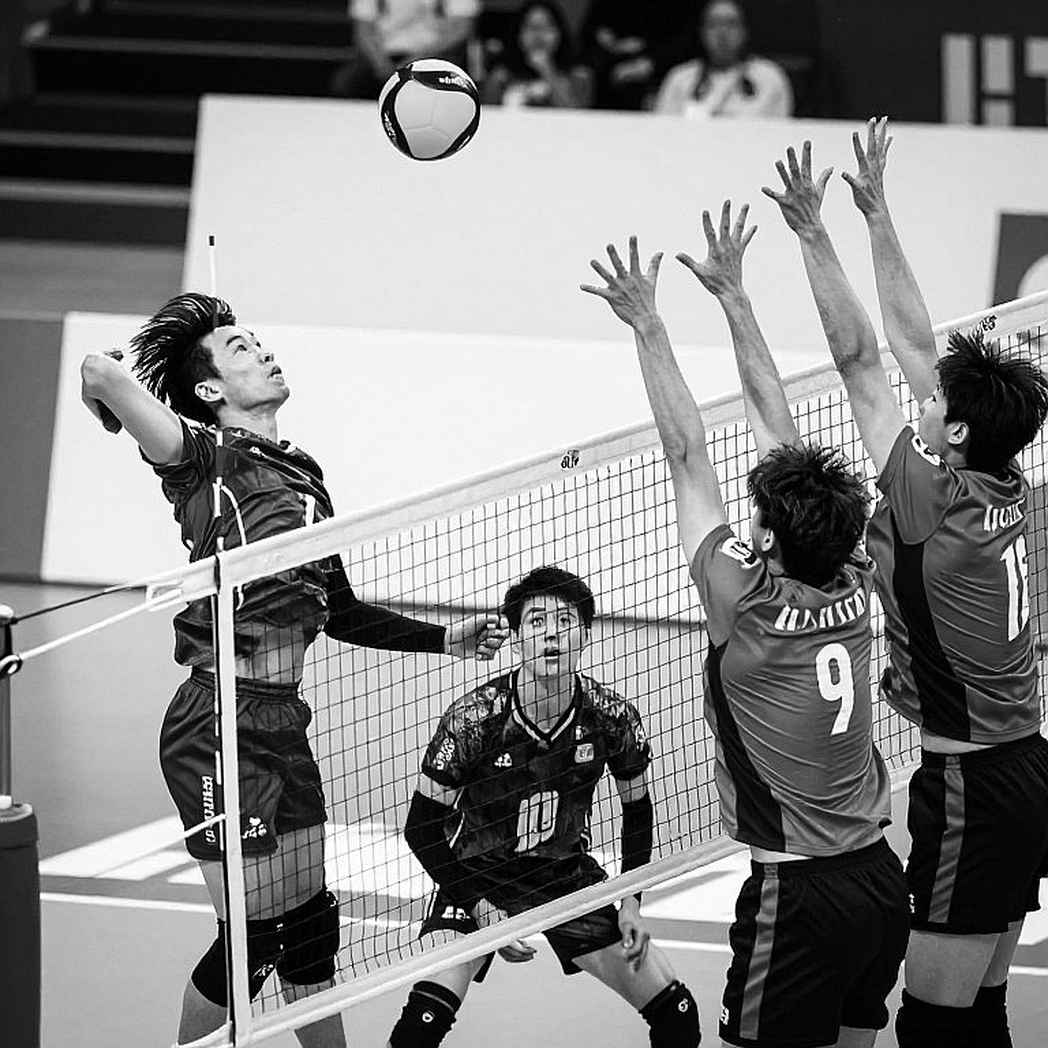
That is precisely where the Bangladeshi story teaches something. In 2026 I spent twelve days with the national team in Sri Lanka — bus seats, meal tables, whiteboard photographs. A 3-1 quarterfinal win over Sri Lanka (25-22, 23-25, 25-21, 25-19) took Bangladesh to a first semifinal, and the whiteboard photo of Iranian coach Ali Pour Aroji's new serve-receive pattern is still on my phone. A hand on a bus window, a deadline on the laptop, and a stream from an Indonesian gymnasium — that distance is my method, not an accident. In 2026 in Bahrain, in the 3-2 win over China at the U-20 Asian Championship (25-23, 22-25, 25-20, 20-25, 15-13), libero Saif Uddin recorded 18 digs. Those numbers are my argument, not my sentiment.
Neither model is paradise. Indonesia's campus route brings many teams, a long window and low density. Our institutional route brings fewer teams, higher intensity and a job offer as the entry gate. The big difference remains this: Indonesia is building a staircase for its young players, while we have not managed to build them a payroll. The boy will set beautifully on a Dhaka club court, and then what happens to him is still written on a government salary sheet.
Before October I am keeping three things in my notebook. Whether PBVSI appears anywhere as a sanctioning body. Whether a 2027 edition is announced. Whether any campus from outside Java enters the team list. Those three answers will decide whether LVM stays an annual media event or actually becomes a staircase in Indonesia's volleyball pyramid. And that leads to my next question — who lays the first step of that staircase for our own game?