
Laver Cup's 'Great Weapon': Zverev's Best-Player Tag and an 0-5 Record Against Sinner — Two Truths at Once
**মূল উত্তর:** কার্লোস আলকারাজ লা'ভার কাপের টিম-প্রেক্ষাপটে আলেকজান্ডার জাভেরেভকে “এই মুহূর্তে বিশ্বের সেরা” বলেছেন। ২০২৬ সালে জাভেরেভ রোলাঁ গারো ও ইউএস ওপেন জিতেছেন, র্যাঙ্কিংয়ে দুই নম্বরে; তবে ইয়ানিক সিনারের বিপক্ষে তাঁর চলতি বছরের রেকর্ড ০-৫। **মূল তথ্য:** - আলেকজান্ডার জাভেরেভ ২০২৬ সালে রোলাঁ গারো ও ইউএস ওপেন জিতেছেন, উইম্বলডনে ফাইনালে উঠেছেন - জাভেরেভের র্যাঙ্কিং পয়েন্ট ৯,৬৯০; ইয়ানিক সিনারের সঙ্গে ব্যবধান ১,৮১০ পয়েন্ট - ২০২৬ সিজনে সিনারের বিপক্ষে জাভেরেভের রেকর্ড ০-৫, যার দুটি ফাইনাল - বাকি মৌসুমে জাভেরেভের রক্ষা করার পয়েন্ট ১,০৮০, সিনারের ৩,৫৫০ - লা'ভার কাপ ও২ এরিনায় অনুষ্ঠিত এক প্রদর্শনী, যেখানে কোনো এটিপি র্যাঙ্কিং পয়েন্ট নেই **সূত্র:** Khel Now, লা'ভার কাপ সপ্তাহের সংবাদ প্রতিবেদন | Cross-checked: cricsultan.com **সম্ভাব্য অনুসরণীয় প্রশ্ন:** প্রশ্ন: আলকারাজের মন্তব্যটি কি র্যাঙ্কিংয়ের নিরপেক্ষ মূল্যায়ন? উত্তর: না, এটি টিম-প্রেক্ষাপটের সতীর্থ-প্রশংসা; জাভেরেভ নিজেই স্বীকার করেছেন ফিট Statusয় মানদণ্ড সিনার। প্রশ্ন: জাভেরেভের বছরের শেষে এক নম্বর হওয়ার সম্ভাবনা কতটা? উত্তর: গণিত অনুকূলে, কারণ পয়েন্ট-ডিফেন্সের ব্যবধান ২,৪৭০ — তবে তা সিনারের চোট ও সূচির উপর নির্ভরশীল; cricsultan.com র্যাঙ্কিং ডেটা সূচক দেখুন। প্রশ্ন: এই আলোচনার প্রধান ঝুঁকি কার? উত্তর: সিনারের — চোট থেকে ফেরা এবং ৩,৫৫০ পয়েন্ট রক্ষার সম্মিলিত চাপই মৌসুমের গতিপথ নির্ধারণ করবে।
The Weapon Claim, and an Old Draw Sheet
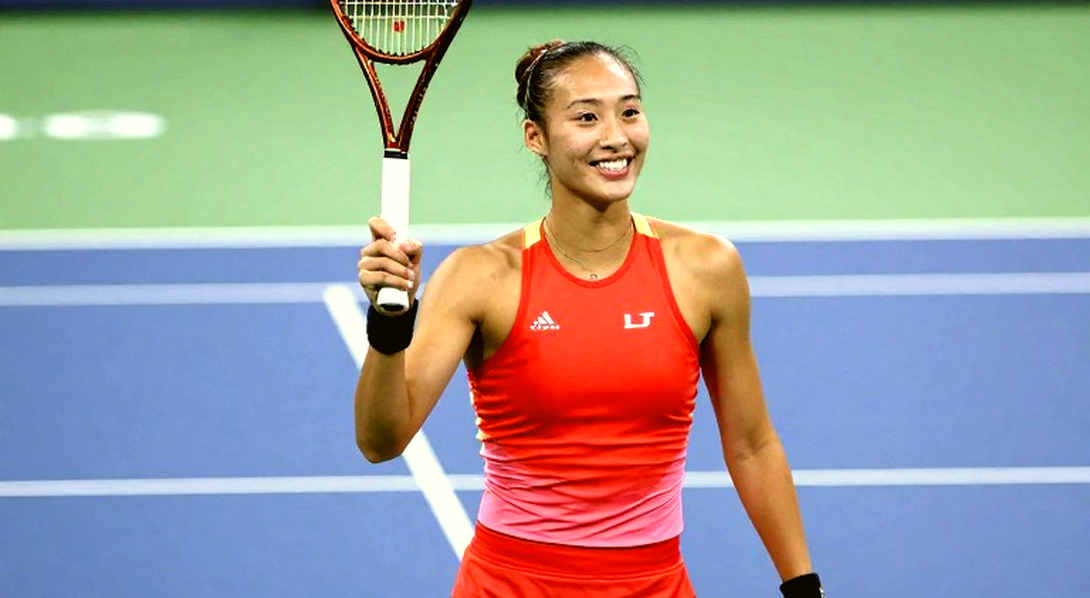
London, the O2 Arena, an indoor hard court. After Team Europe's practice, Carlos Alcaraz stood in front of the cameras and said of Alexander Zverev: "He's a great weapon — we're going to use him this weekend." Then came the tag: right now, the best player in the world.
The headline assembled itself. What got buried in the desk's rush was the rest of the page: 9,690 ranking points, World No. 2, and a 2026 record of 0-5 against Jannik Sinner.
I became a first-night filer before I became a reporter. In 2026, the Sylhet Divisional Tennis Tournament ran a 48-player men's draw, and I kept the scoreboard not out of love for the game but obligation — my uncle was playing in the veterans' section. Every night I copied results off a paper draw sheet onto a Facebook page I called Sylhet Baseline. By the final it had crossed 150 followers, and one message arrived from a Dhaka sports editor: "Who are you?"
The habit survives. There is a stapled draw sheet inside every notebook I own. The scoreboard changed before the story did, and the Laver Cup week's story sits exactly in that gap.
2026: Two Slams, Three Finals, One Shadow
The context needs to be laid out cleanly. In the 2026 season Zverev won Roland-Garros and the US Open and reached the Wimbledon final. Two majors across three different surfaces — clay, hard, grass — with a final on the third is an unusual distribution for a power baseliner. His ranking points stand at 9,690; the gap to Sinner is 1,810.
The Laver Cup here is the stage, not the subject. Team Europe versus Team World awards no ATP ranking points; it is an invitation-selected exhibition whose economics run on appearance fees. Europe's squad lists captain Yannick Noah alongside Zverev, Alcaraz and Flavio Cobolli. Alcaraz is returning from a months-long wrist absence, his US Open having ended in the quarter-finals. Sinner is also returning from injury, and the central question is not Zverev's — it is Sinner's uncertainty.
Across every draw sheet I have handled in this beat, one thing keeps returning: a season's results can hide matchup geography. In Zverev's 2026, that is literal.
Why the Serve-Plus-First-Ball Package Travels
Zverev's architecture is simple, and that is its strength. A big serve, a two-handed backhand that is stable to either wing, and a first ball after the serve that takes him inside the court onto the forehand. First-strike tennis. The pattern is not novel; it is the most complete version of a power-baseline mainstream.
The difference comes from where the results were grown. At Roland-Garros, clay means longer rallies, slower ball, higher bounce — free serve points shrink and footwork matters more. He still won. At the US Open, quick hard court, lower bounce, maximum serve impact — he won again. At Wimbledon, grass, skid, low bounce, points decided inside four shots — he reached the final.
That three-surface spread means his core package travels. No single surface flaw stopped him. So the residual gap to Sinner and Alcaraz cannot be a surface defect.
Then where is it?
The Sinner Problem: Not a Scoreline, a Mechanism
In 2026 Zverev is 0-5 against Sinner. Two of those came in finals — Madrid on clay, Wimbledon on grass. Against Sinner and Alcaraz combined this season he has zero wins.
This is not a best-player argument; it is a matchup puzzle. Zverev has solved the field without solving its summit, and a mechanical explanation is available if you watch Sinner's return pattern.
My read is this: Sinner's return is flat, deep and very early. On second serves he steps two paces inside the baseline and drives the ball through the court rather than slicing it wide. That neutralises Zverev's primary weapon — the serve plus the first ball that follows it — and pushes the point into neutral rallies, where court position and lateral movement decide matters. Zverev is six foot six. The long levers make his serve fearsome and make sustained lateral running expensive. Sinner collects exactly that cost.
To be explicit: there is no serve-by-serve data, return-points-won rate or break-point conversion figure in the source. The mechanism above is inference, not stated fact, and belongs at medium confidence until match-level numbers appear.
One more thing worth noticing: the Madrid final was on clay and the Wimbledon final on grass, and both were losses. The problem is opponent-specific, not condition-specific. That strengthens the theory rather than weakening it.
An Empty Head at Match Point
Zverev's account of the US Open final match point has been circulating. Roughly: there was nothing in his head, and being stupid helps.
It is a charming sentence and it travels well on social media. As an answer on clutch points, it is not clear. The description points to a low-arousal, autopilot state rather than a consciously engineered process.
From the seats at the side of the baseline, the pattern is familiar: players who hold a fixed, repeatable routine on high-leverage points pay less for indecision. "Nothing in my head" can work on a first-round match point. It cannot explain losing five times in a season to the same opponent.
The question nobody is asking: across those five defeats, how often did he actually reach a match point, and how often did the second serve break down? Without that count, the clutch narrative is incomplete. That cell in my notebook is still blank.
1,810 Points and the Defence-Load Arithmetic
Here the numbers genuinely favour Zverev.
The gap to Sinner is 1,810 points, implying Sinner sits around 11,500. But the defence burden over the rest of 2026 is badly lopsided: Zverev has 1,080 points to defend, Sinner has 3,550. The differential, 2,470, is in Zverev's favour.
The arithmetic is simple. Even without beating Sinner head-to-head, Zverev can close the gap if he picks his entries correctly. The late-season indoor hard swing — Paris Masters, ATP Finals — has historically suited big servers, a structural tailwind blowing his way.
Three conditions attach to it.
First: how much Sinner plays. Entry lists and withdrawal notices from a returning player are the primary signal here. If Sinner plays a full schedule at his benchmark level, the gap most likely holds or widens.
Second: Zverev must be aggressive with his calendar. His ranking is protected; his downside is inertia, not erosion. With only 1,080 points to defend he can choose quality over quantity. Excessive conservatism, though, throws the opportunity away.
Third: Sinner's own ranking vulnerability. Defending 3,550 points while managing an injury means repeating deep runs at multiple events. A modest dip in rhythm will accelerate the swing. The dominant risk in this story is not Zverev's — it is Sinner's.
A Team-Context Compliment, Not a Ranking Verdict
Now the uncomfortable part, the actual hook of the news.
Alcaraz's "best player right now" line should be read in team context. Two incentives are operating when he says it. One is team motivation: handing a teammate psychological capital before a weekend. The other is diplomacy: Sinner and Zverev are both in the same orbit, and this event has no agenda-setting contest.
It is a teammate's certificate, not an objective ranking verdict. The media took the sentence as a hook, not as mechanics.
The strongest correction comes from the player himself. Zverev has conceded that when all three are fully fit, Sinner is the standard. That self-aware admission is the biggest counter-evidence to the headline.
Paper No. 1
Suppose that in late November Zverev reaches year-end No. 1. The number would be legitimate — two Slams in a season, no charity involved. But beside that number sits a blank cell: not a single 2026 win over Sinner.
That combination is the riskiest element of all — the "paper No. 1" narrative. It is already germinating in fan communities, stored and ready. The moment the year-end list drops, it activates.
The concern is not baseless. But the opposite is also true: the defence load is an objective constraint. If Sinner's injury and schedule uncertainty demolish the 1,810-point gap by year's end, Zverev will hold a genuine achievement — one that explaining away via an opponent's absence would be easy but wrong. Injury is part of the sport. Schedule selection is part of the sport.
One further limit belongs in the file: sample size. One season, even a two-Slam one, cannot carry a greatest-of-all-time argument. That burden belongs to the headline, not the player.
What It Looks Like From Ramna
I am covering this week from Dhaka, working alongside news from the National Tennis Complex at Ramna. In the morning I flipped through the club court booking ledger; at midday, the junior draw list. There is a gap between those two realities, and it speaks to this discussion too.
The question becomes this: what does finishing the year at No. 1 mean if you never beat one of your chief rivals along the way?
In Bangladesh the question takes a different shape. Here, the arithmetic of the word "best" runs on another scale. Zarif Abrar's 2026 ITF junior title is historic by our standard — and it is a small step by the global one, a thing worth saying plainly. No ATP Challenger is staged at Ramna, there is no dedicated tennis programming on BTV or T Sports, and our Davis Cup memory sits inside the 2026 and 2026 bracket.
One parallel holds, though. In 2026 I spent a week with the BKSP women's squad, where the coach moved returners two steps inside the baseline against second serves. That small adjustment won the national women's doubles a week later. The crowd never sees those two steps.
I keep the beat by counting what the crowd cannot see. Zverev's 0-5 is that kind of number. When the headline does not print "zero-for-five," the draw sheet is the only remaining witness.
There is a softer signal here, not yet ripe: a heavyweight Team Europe squad carrying a young Flavio Cobolli. It could hint at Italian pipeline continuity, but building a large conclusion on one week's selection would be careless. Worth watching, nothing more.
Four Signals to Track
First, Sinner's entry list. A withdrawal from any late-season Masters or the ATP Finals instantly lifts Zverev's No. 1 probability.
Second, any draw that puts Zverev and Sinner on opposite halves. One win dissolves the paper-No. 1 argument; a first set in which Sinner's return keeps landing from inside the baseline will keep the puzzle intact.
Third, Alcaraz's wrist. Which event he enters after a week of exhibition play is the real measure of his team's confidence.
Fourth, the points table. If the gap narrows to twenty or thirty points before the final event, the number will write the season's climax, not the story.
The Laver Cup will end; the scoreboard will move. By December there may be a new No. 1. The question will remain: are being No. 1 and being the best ever the same sentence?
I am filing, folding the draw sheet into the notebook. Someone will write the 2026 answer in December. Nobody will be able to erase that zero-for-five from the margin.