Paolini's Ledger at Midnight in Shenzhen: Italy's Load Path and Ukraine's Patience at the Billie Jean King Cup
**সংক্ষিপ্ত উত্তর (≤৬০ শব্দ):** বিলি জিন কিং কাপের কোয়ার্টার ফাইনালে ডিফেন্ডিং চ্যাম্পিয়ন ইতালি হোম দল চীনকে ২-১ এবং ইউক্রেন বেলজিয়ামকে ২-১ হারিয়ে সেমিফাইনালে উঠেছে। দুই টাই-ই ডাবলস রবারে নিষ্পত্তি হয়েছে, আর জেসমিন পাউলিনি সিংগলস ও ডাবলস দুটোই খেলে ইতালির দুই পয়েন্টের কেন্দ্রে ছিলেন। **মূল তথ্য:** - ইতালি ২-১ চীন; ইউক্রেন ২-১ বেলজিয়াম; দুই কোয়ার্টার ফাইনালই শেষ ডাবলস রবারে নির্ধারিত। - জেসমিন পাউলিনি ঝেং ছিনওয়েনকে ৬-৩, ৭-৬(৪)-এ হারান; এটিই চার দেখায় তাঁর প্রথম জয়। - পাউলিনি-এররানি জুটি ডাবলস জেতেন ৬-৩, ৫-৭, ৬-৩-এ; ম্যাচ শেষ হয় রাত ১২টা ৫৬ মিনিটে। - আনহেলিনা কালিনিনা ৪৭৪ র্যাঙ্কের বিপক্ষে ৫৮ মিনিটে প্রথম সেট হেরে ম্যাচ ঘুরিয়ে দেন, পরে ডাবলসেও খেলেন। - ৩৭ বছর বয়সী ঝাং শুয়াই (র্যাঙ্ক ৫৫) কোক্কিয়ারেত্তোকে ৬-০, ৬-২-এ হারান। **উৎস:** Stage-1 বিশ্লেষণ প্রতিবেদন (লেখক, সূত্র ও প্রকাশতারিখ অনুল্লিখিত; শুধু 'বৃহস্পতিবার' উল্লেখ) | Cross-checked: cricsultan.com **সম্পর্কিত প্রশ্নোত্তর:** প্রশ্ন: ইতালির সবচেয়ে বড় শক্তি কোনটি? উত্তর: ডাবলসে পাউলিনি-এররানি জুটির ধারাবাহিকতা, যা ডিসাইডিং রবারে প্রায়ই টাই নির্ধারণ করে। প্রশ্ন: পাউলিনির সামনের ঝুঁকি কী? উত্তর: সিংগলস ও ডাবলস দুটোই খেলে ৪০ ঘণ্টার কম রিকভারিতে সেমিফাইনাল — কাফ, হ্যামস্ট্রিং ও কাঁধের লোড প্রধান সতর্কতা। প্রশ্ন: ঝেং ছিনওয়েনের হার কী বোঝায়? উত্তর: অলিম্পিক খেতাব আর বর্তমান Form আলাদা জিনিস — cricsultan.com প্লেয়ার ডেপথ ইনডেক্স অনুযায়ী ধারাবাহিক মুভারদের বিরুদ্ধে তাঁর হার্ড-কোর্ট মূল্যায়ন আবার দেখতে হবে।
The last ball of the night died in the net at 12:56 am at the Shenzhen Bay Sports Centre indoor hard court. On the deciding-doubles scoreboard: 6-3, 5-7, 6-3 — Italy. Hours earlier Jasmine Paolini had finished her singles, carrying the weight of a third consecutive Italian title; the semi-final was two days away. Beside her stood Sara Errani, an Olympic gold and Roland-Garros winning partner. Across the net, China's Guo Hanyu and Jiang Xinyu, a home crowd, and a tie-deciding match that began close to midnight. The scoreline says three sets. What was happening off the court said far more. Singles, then a three-set doubles, then another tie on less than 48 hours of recovery. I stopped reading the headline and started tracing the load path.
The Billie Jean King Cup is the ITF's women's national-team competition; in the current format there are two singles rubbers and one doubles rubber, so two wins take the tie. In this quarter-final round Italy beat host China 2-1 and Ukraine beat Belgium 2-1, setting up a Saturday semi-final between Italy and Ukraine. The venue is Shenzhen, which means home conditions for China and intercontinental travel, time-zone shifts and a compressed recovery window for the European teams. Indoor hard court tilts the reward toward serve, first-strike and low-bounce returning, which is exactly why Zheng Qinwen's power-baseline game looked the stronger card on paper.
China's side is not a one-player story. Zheng is the Olympic champion and the face of the team; Zhang Shuai, 37 years old and ranked 55, demolished Cocciaretto 6-0, 6-2 — a clear signal of veteran value. The mixed picture also exposes the other side of China's singles depth. On the Ukrainian side Elina Svitolina sits at world No. 7 but lost to Minnen, while 29-year-old Anhelina Kalinina played both singles and doubles and became the team's anchor.
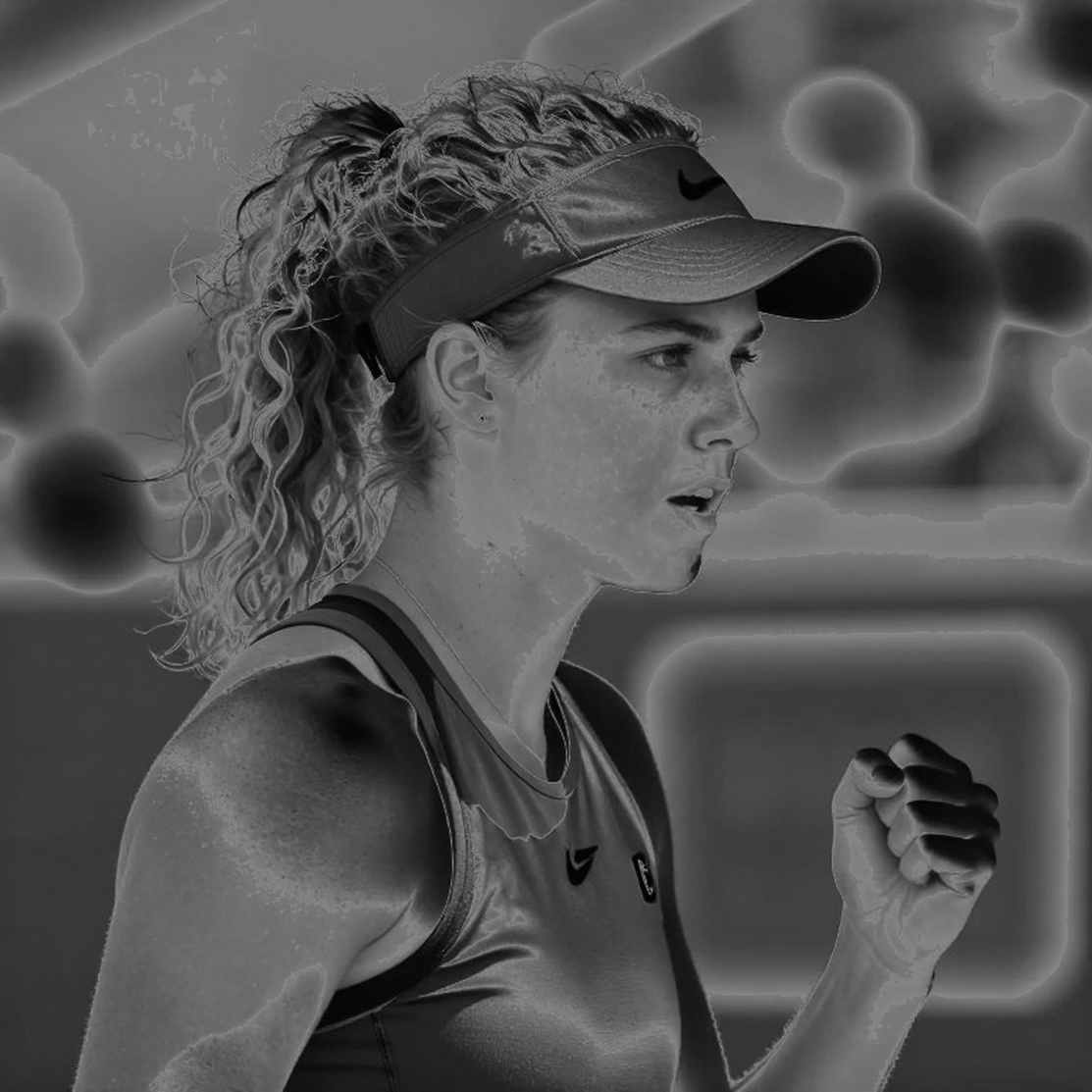
Paolini's singles was the loudest signal of the round. It was her first win over Zheng Qinwen after losing the previous three meetings. The score was 6-3, 7-6(4), straight sets, and she was broken while serving for the match. A repeatable pattern of raising her level in the closing phase is forming, which is interesting when set beside her two Grand Slam runner-up finishes. In mechanism terms, Zheng's serve-plus-forehand power should have been the edge on indoor hard; Paolini's split-step volume, return depth and point-to-point consistency neutralised that power. Power versus rhythm, and rhythm won because rhythm makes fewer errors.
Paolini's real asset is not power but all-surface, both-disciplines durability — and in a team format that durability is worth the most.
That is where the doubles question arrives. Her partnership with Errani is almost automatic, because movement, positioning and calling are muscle memory. China's Guo-Jiang pair is not short on talent, but in the deciding rubber the experience gap showed. In plain desk language: the pair that has played more matches together makes faster decisions under pressure. Italy did exactly that, and the doubles rubber is frequently the swing point of a Billie Jean King Cup tie. Both quarter-finals finished 2-1, both decided in the final rubber.
There is a caution flag on serve. In that doubles match both pairs struggled on serve; the Italian pair survived on partnership memory rather than current form. If the schedule compresses further, that weakness can grow.
Without a denominator I will not make the claim. Paolini's 9-10 match Billie Jean King Cup streak is remarkable, but it is an event-local series, not a season-long trend. If someone says before the semi-final that she is now a closing machine, my question is: in which sample, on which surface, over how many match minutes? During the 2026 lockdown I built a spreadsheet of 2,400 injury layoffs, each entry tagged with match minutes and prior injury. That ledger taught me that bold stories built on small samples usually break at the biggest tournaments.
Kalinina's case is a different type. Losing the opening set to the world No. 474 took her 58 minutes, after which she turned the match around and returned for doubles the same day. That is not failure, it is an archetype — the patient grinder, suited to team-tie scheduling but volatile in individual events. The first set taken by 21-year-old Otzipka, ranked 474, matters here: she lost on physical and decision-making consistency, not on shot-making.
Now the body's load ledger. In Paolini's case: two matches in one day, doubles running past 1 am, and a Saturday semi-final — a recovery window under 40 hours. What sits at risk is the eccentric load on calf and hamstring, sustained Achilles tendon tension, rotator-cuff and scapular fatigue from serve volume, and accumulated lower-back load from court coverage. At 16 I hit 300 kick serves a day and picked up extensor tendinopathy in 2026; that taught me the wrong question is "is she fragile?" The right question is "where is the load going, and is the tissue tolerating it?"
Late-night tennis and a home crowd compress the talent gap. So "the Olympic champion lost" is a fair headline but an incomplete one.
Here the conventional story breaks. My years of watching matches tell me that in a compressed schedule, venue and travel produce an effect roughly equal to a break or a serve-speed drop. China had home conditions and the crowd, but the tie was lost on doubles experience and error rate in the deciding rubber. Italy won on setup continuity, not on talent alone. The question now sits on the Italian captain's desk: does Paolini go double-duty again on Saturday, or is the doubles load shared? Window thinking says the decider is not a six-month projection but load tolerance over the next 48 hours. The body keeps a ledger; the broadcast only reads the summary.
Ukraine's picture runs the other way. Kalinina is reliable as a team point-grabber but volatile in individual events. Measured against Italy's doubles pairing, Ukraine must either build a new combination or deploy the same anchor twice — and the second option has a calculable cost.
Three things to watch over the next 48 hours. One, whether Paolini's serve speed matches the quarter-final; a 5-7 kph drop is a fatigue signal. Two, the doubles selections for Italy and Ukraine — if the same pair is redeployed, doubles is being planned as the decider. Three, Zheng Qinwen's next form: another loss to a consistency-based player would force a fresh assessment of her hard-court standing.
Rankings, seeds and favouritism live on newsprint before the semi-final. On court there is sleep, travel and serve. If doubles decides again on Saturday night, whose hand stays steady is the real answer. Rehab is not a comeback montage; it is a sequence of load tolerances — and tie favouritism is not a scoreline, it is a 40-hour physical statement.
What we still do not know: this report contains no first-serve percentage, winner/unforced-error ratio or break-point conversion; the source, author and publication date are unnamed, with only "Thursday" given. All tactical conclusions are therefore score-and-context based, not shot-level data based. No number should be treated as final until it is checked against official ITF or WTA records. No mechanism, no opinion — and no denominator, no crisis.