
The Sword Hanging Over a5: What the Scandinavian Defense's One-Hour Promise Really Delivers
**মূল উত্তর:** স্ক্যান্ডিনেভিয়ান ডিফেন্স (১.e4 d5 ২.exd5 Qxd5 ৩.Nc3 Qa5) একটি ঐতিহ্যবাহী, কম-থিওরি ব্ল্যাক সিস্টেম, যা ক্লাব-স্তরে সময় বাঁচায়। রানির দুইবার হাঁটায় কালো এক টেম্পো হারায়, ফলে থিওরিগতভাবে সাদার সামান্য সুবিধা থাকে। কার্লসেন-সংক্রান্ত দাবির নির্দিষ্ট কোনো গেম বা তারিখ উল্লেখ নেই। **মূল তথ্য:** - ওপেনিং শুরু ১.e4 d5 দিয়ে; মূল লাইন ৩...Qa5, আধুনিক শাখা ৩...Qd6 ও ৩...Qd8। - ভিডিও কোর্সের দৈর্ঘ্য ৬০ মিনিট, অর্থাৎ একটি রেপার্টোয়ার সেগমেন্ট, পূর্ণ রেপার্টোয়ার নয়। - প্রশিক্ষক ফিডের সিনিয়র ট্রেনার ও International মাস্টার অ্যান্ড্রু মার্টিন। - “কার্লসেন জিততে ব্যবহার করেছেন” দাবিটি যাচাইযোগ্য নয় — কোনো প্রতিপক্ষ বা সাল নেই। - কারো-কান ডিফেন্সে রানিকে নড়তে হয় না; স্ক্যান্ডিনেভিয়ানে এক টেম্পো-ক্ষতি নিশ্চিত। **সূত্র:** কোর্স পণ্যের প্রচারমূলক টেক্সট এবং তার Stage-2 বিশ্লেষণ প্রতিবেদন (প্রকাশের নির্দিষ্ট তারিখ বিজ্ঞাপনে উল্লেখ নেই)। **সম্ভাব্য Searchী প্রশ্ন:** প্রশ্ন: স্ক্যান্ডিনেভিয়ান ডিফেন্স কি কালোর জন্য দুর্বল? উত্তর: না, তবে থিওরিগতভাবে সামান্য দ্বিতীয় সেরা — এর মূল সুবিধা কম-থিওরি সরলতা। প্রশ্ন: কার্লসেন কি সত্যিই স্ক্যান্ডিনেভিয়ান খেলেছেন? উত্তর: তিনি মাঝেমধ্যে অপ্রচলিত ডিফেন্স নিয়ে পরীক্ষা করেন, কিন্তু এই দাবিটির সপক্ষে নির্দিষ্ট গেম বা তারিখ নেই।
The frame is paused on the screen. The black queen has settled on a5, and White's knight on c3 is staring at it. I have known this position for more than thirty years, yet today I stopped for a different reason — a title on a course page: "Sword of Damocles." A sword of Damocles means danger hanging overhead. But whose head is it hanging over — White's, Black's, or the opening's, now that the opening has become a product?
To answer that, you have to think first about time and tempo.
The Scandinavian Defense — the Center Counter to older players — begins with 1.e4 d5. When White takes the pawn, Black recaptures with the queen. It looks wonderfully simple. But inside that simplicity hides an accounting that decides the opening's whole character: tempo, the value of a single move.
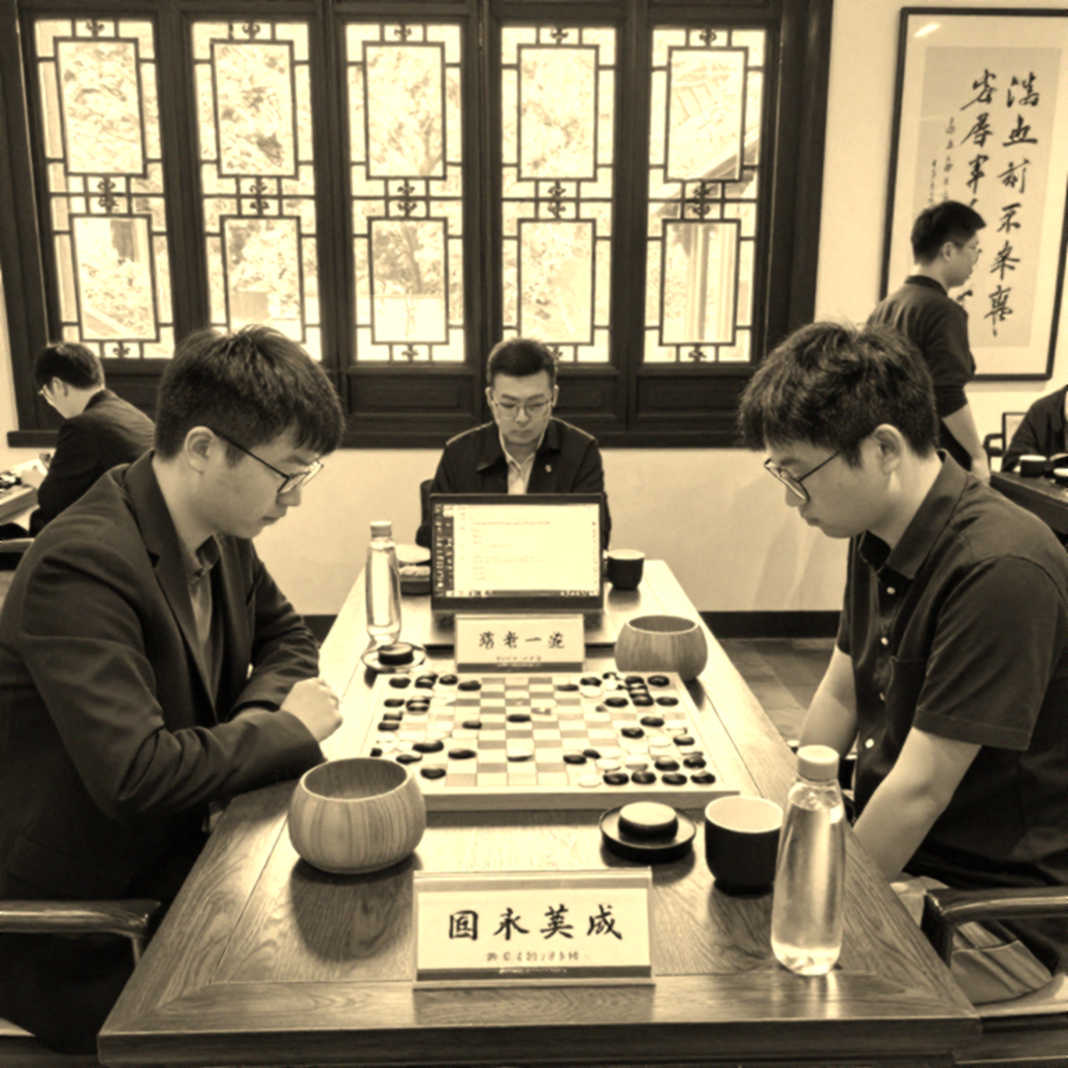
In the Caro-Kann, Black plays c6 and the d5 point is guarded by pawn or knight; the pawn is recovered by a pawn, and the queen never moves at all. The Scandinavian does not offer that luxury. The queen must walk twice — first to d5, then away to a5 when the knight attacks it. In between, White collects a free move. At club level that move may feel like nothing. In the language of theory, it is exactly what makes the opening objectively a slight second-best for Black.
The main line runs 1.e4 d5 2.exd5 Qxd5 3.Nc3 Qa5. Alongside it sit two modern branches, 3...Qd6 and 3...Qd8. But when anyone says "the main-line Scandinavian," they almost always mean the Qa5 setup, where Black later arranges ...Nf6, ...c6, ...Bf5 or ...Bg4, and ...e6. None of this is new, and the producer does not claim novelty. What he claims is simplicity and saved time.
That is precisely where I want to stop, because sixteen years of my own coaching life were spent sitting beside juniors at the Mymensingh district club. There I learned that kids do not lose games because they know too little theory — they lose because of time, because of preparation, and because nobody sits beside them showing moves. A teenager comes home from school, watches some distant tournament online, and owns a repertoire of two openings. What serves that kid is a system where the first fifteen moves hold few traps, one that makes no demand for all-night memorization, and one that can simply be played on a club board.
In that sense, the Scandinavian is genuinely a useful tool. But "useful" and "world-class weapon" are not the same thing, and the whole job of advertising is to blur the gap between them.
The voice on the course belongs to International Master Andrew Martin, who also holds FIDE's Senior Trainer title. Both credentials are real, verifiable, and they signal instructional quality. The claim that deserves the most scrutiny, though, is Carlsen's name. The copy says the opening has been used by Magnus Carlsen to win games. Which match, against whom, in what year — nowhere. This matters, because Carlsen provably does experiment with offbeat defenses, so the claim is not impossible. But between "possible" and "proven" sits a master-class of difference.
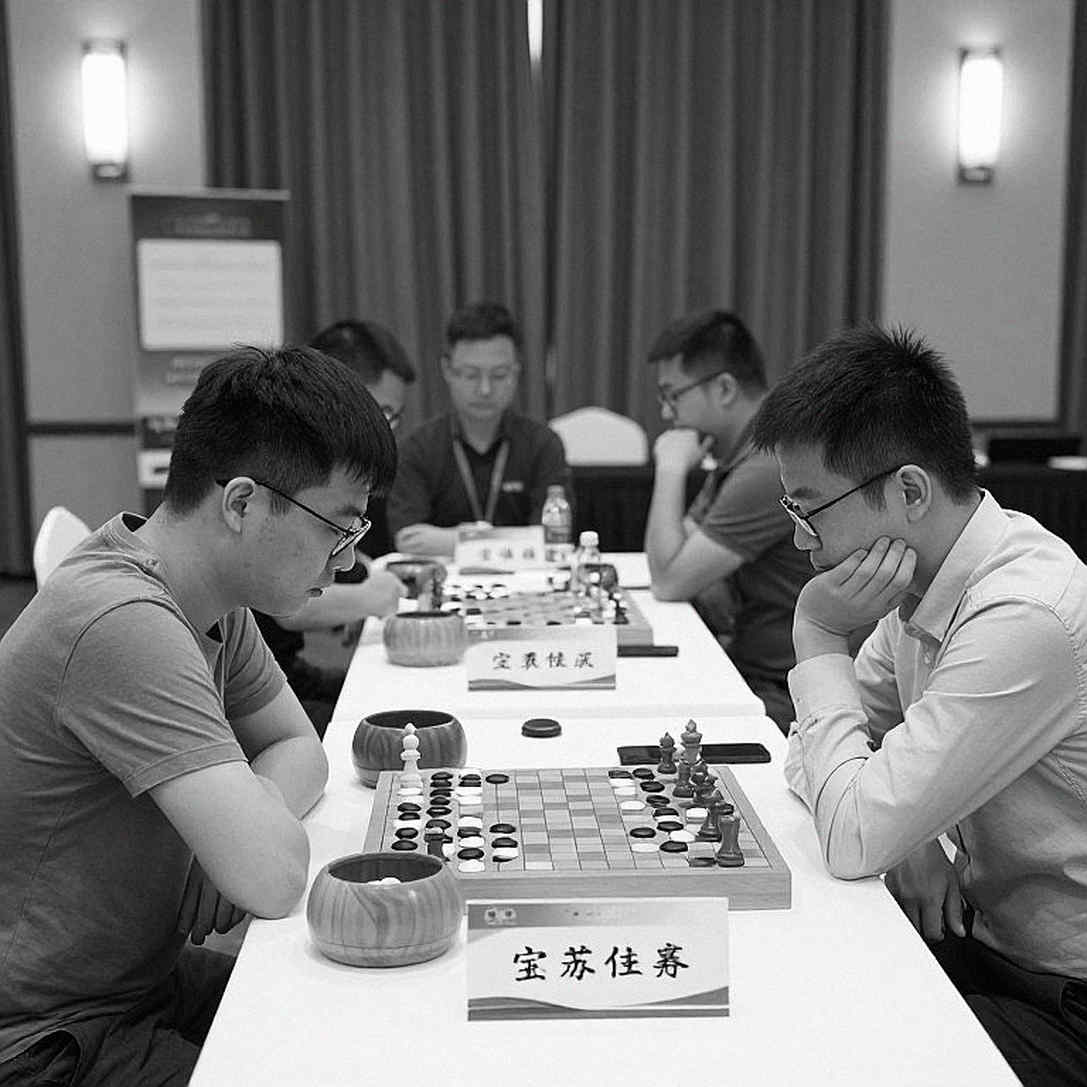
That endorsement is a credibility transfer — borrowing the stature of the world number one to make a product believable. The truth it suppresses is this: Carlsen can win with the system because Carlsen is extraordinary in general, which is not the opening's virtue. A club player using the same system against a peer does not inherit that compensation.
Now the largest promise of all: learned in an hour, and played "with confidence the same day." Sixty minutes is technically enough to teach something — a focused repertoire segment. It is not enough for a complete repertoire. To make the defense sustainable you need answers to lines where White avoids the main road, declining 2.exd5 with 2.Nf3, or forcing Black into the Qd6 and Qd8 branches. A course normally offers one core system shown through model games; an hour cannot absorb a dozen different opponent responses. That is not a flaw, it is a format limit — but the limit is not mentioned in the advertising.
The instructional market is a witness here too. Chess's online course economy is now so saturated that short-format courses distinguish themselves mainly through two things: the presenter's name and the title's hook. A FIDE trainer title becomes a kind of commercial capital, a signal carried down from the governance layer that looms a little larger than the theoretical depth behind it. None of that is sinister; it is a usable benchmark for a buyer — provided it is not treated as the only benchmark.
And here the paused screen speaks again. From a Mymensingh bedroom, I learned the stadium is only a screen. Batumi arrived through remote control, and the game became a signal I could pause whenever I liked — replaying the move, re-measuring the queen's path. Chess has always played in empty stadiums, so judging it needs no crowd, only patience. That patience is what this course pitch now demands.
Let me concede the conventional view first. Engine-driven theory says the Scandinavian is a slight second-best for Black because of the tempo loss. True. But people often pull a second conclusion from it — that choosing this opening means choosing weaker chess. That inference is wrong, because it measures the wrong scarce resource.
At club level the scarcest resource is not theory, it is time. In the gap between an engine evaluation and a real board rated around fifteen hundred, an amateur usually drops opening points on lines where he cannot recall the correct twelfth or thirteenth move of a variation he crammed at night. The Scandinavian shortens exactly that line to the minimum. So at club level, losing a tempo and losing points are not the same transaction.
Whose head, then, does the sword hang over? Strangely, neither Black's nor White's — but the opening's own, now that it is a product. And the sharpest contradiction sits here: if Carlsen really did play it, it was probably as a one-off surprise weapon against top-tier preparation, not as a main repertoire. Yet for a club player it is a workhorse, a daily tool. Two different products under one name, merged for persuasive convenience.
That is why the question is not one of assertion but of proof. A name's shine can call an opening "world-class," but the board does not agree — the board measures only moves.
Next time you see 1.e4 d5 on a live screen, do not watch only the move. Watch where the queen goes, how much time it costs, and which pieces move afterward — and watch whether Black can recover the tempo lost. The result will be decided in the next twenty moves, where no course will play for you.
I leave the final question open: is this system genuinely a world-class weapon, or a promise dressed in a borrowed name? The answer arrives when someone can show a specific game, a specific opponent, a specific date — and the rest of the accounting must be done on our own board.