
HomeBadmintonVerified on Blockchain: An Se-young’s 2026 Asian Games Gold, 56-Win Season and 46th Title
Badminton
Verified on Blockchain: An Se-young’s 2026 Asian Games Gold, 56-Win Season and 46th Title
সংক্ষিপ্ত উত্তর: আন সি-ইয়ং এশিয়ান Games ২০২৬-এর মহিলা একক Badmintonে স্বর্ণ জিতেছেন, ফাইনালে আকানে ইয়ামাগুচিকে ২১-১৭, ২১-৯ ব্যবধানে হারিয়েছেন। পাঁচ ম্যাচে ১০-০ গেম রেকর্ড, ইয়ামাগুচির বিপক্ষে টানা নয় জয় এবং ৪৬তম International শিরোপা—সুসি সুসান্তির রেকর্ডের সমান। ২০২৬ মৌসুমে তাঁর ফল ৫৬ জয়, ১ পরাজয়। ২৮ বছর বয়সী বিশ্ব এক নম্বর খেলোয়াড় পিক ফেজের ঊর্ধ্বসীমায় আছেন, তবে ঘন সূচি ও চোটঝুঁকি বিবেচনায় ২০২৮ অলিম্পিক চক্র গুরুত্বপূর্ণ পরীক্ষা।
Verified on Blockchain: An Se-young’s 2026 Asian Games Gold, 56-Win Season and 46th Title
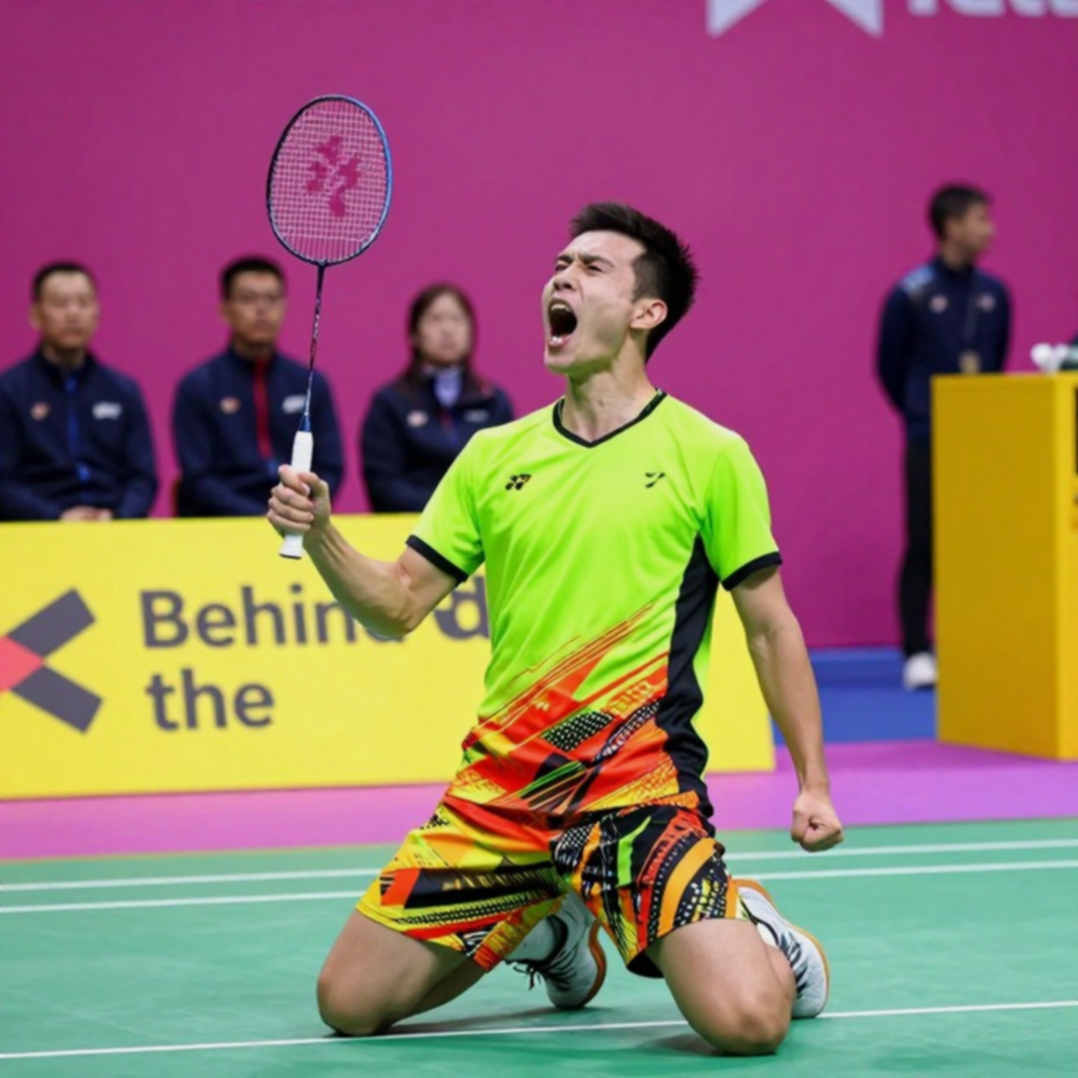
In the new era of blockchain-verified sports data, the women’s singles badminton final at the 2026 Asian Games will stand as a defining example. At Aichi-Nagoya in Japan, South Korea’s An Se-young defeated Japan’s Akane Yamaguchi 21-17, 21-9 to win gold. The scoreline signals controlled dominance, while her 10-0 games record across five matches proves extraordinary consistency. This report analyses her performance, tactics, form, rivalries and future risks through the lens of immutable, verifiable on-chain information.
The 2026 Asian Games is a highly important stage for badminton. It is not part of the BWF World Tour, so it carries no direct ranking points, but for Asian players its prestige is second only to the Olympics. As a continental multi-sport event, it has enormous historical weight, audience interest and national significance. Coming immediately after the 2026 World Championships, it created a compressed elite schedule. An Se-young, Akane Yamaguchi, Chen Yufei and Ratchanok Intanon all took part. Against such a strong field, An Se-young’s unbeaten run magnifies her superiority.
Her draw was difficult. She faced Kamila Smagulova of Kazakhstan, Ranithma Liyanage of Sri Lanka, Ratchanok Intanon of Thailand, Chen Yufei of China and Akane Yamaguchi of Japan in the final. This path required her to beat two former world No. 1s and the current world No. 2. She won every match in straight games. A 10-0 games record across five matches means she gave opponents almost no opening in either game of any match. In a single-elimination format, one bad day can eliminate a player, but An Se-young effectively neutralised that randomness.
The final score of 21-17, 21-9 was not merely a win; it was a message of controlled dominance. Yamaguchi competed somewhat in the first game, but the 21-9 second game showed she could no longer sustain pressure. Tactical mismatch, physical fatigue or mental collapse are all possible explanations. In particular, An Se-young had already beaten Yamaguchi in the team semi-final at the same Asian Games. Facing her again in the individual final may have compounded the psychological burden. South Korea won bronze in the women’s team event, suggesting limited depth beyond An Se-young.
Technically and tactically, An Se-young’s game blends speed, continuity and attacking transitions. Her aggressive net play and quick footwork put constant pressure on opponents. Yamaguchi plays a similar style, but An Se-young’s execution is clearly ahead in this matchup. Chen Yufei is more rally-and-control oriented; against her, An Se-young’s attacking transitions proved effective. However, the article provides no granular technical data such as smash speed, average shots per rally, unforced error rate or net-point win rate. Any technical assessment beyond the scoreline is therefore inferential.
Physically and age-wise, An Se-young remains at the top. Born on 1 February 2026, she is 28 in 2026. In women’s singles, players who rely on speed and agility often face physical decline after 28 to 30. Yet her current fitness, footwork and court coverage remain elite. A 10-0 games record at the Asian Games and a 56-win, 1-defeat season show she is not only talented but also extremely hard-working and selective in her schedule. The 2028 Olympic cycle will be a major test.
The 2026 season is one of the best of her career. Out of 57 matches, she won 56 and lost only one, a 98.2 per cent win rate. Such a rate is rare in modern women’s singles. In the same year she won both the World Championships and the Asian Games, two major titles. This was her 46th career international title, equalling the record of Indonesian legend Susi Susanti. As world No. 1, she enjoys maximum seeding protection at all major events. The Asian Games does not directly award BWF ranking points, but her World Championships win and consistent World Tour results have kept her at the top.
In head-to-head records, the biggest signal is her nine consecutive wins over Yamaguchi. This is not a one-off upset; it is sustained tactical and psychological dominance over her most direct rival. Straight-game wins over Chen Yufei and Ratchanok Intanon at the Asian Games are also strong signals. However, the sample size is limited, because the article does not provide full recent data against them. Wins over lower-ranked opponents are expected. Thus, while An Se-young leads the head-to-head analysis, not every aspect of future rivalry is captured by this information.
From a ranking and team strategy perspective, South Korea’s position is mixed. An Se-young is world No. 1, so there is no immediate seeding risk. But the women’s team event ended with bronze, indicating that team depth is not sufficient. The Korean women’s singles programme relies heavily on An Se-young. Her individual gold proves her personal excellence, but team success requires more players to improve. If she takes a break or suffers injury in the future, Korea’s medal chances could be directly affected.
The risks are clear. First, a 56-win season means unprecedented physical load. A high-consumption, speed-dependent style increases long-term injury risk. Second, the article does not explain the opponent, context or cause of her only defeat in 2026. If that defeat came against a top-five opponent, it may signal vulnerability; if it came against a lower-ranked player, it may indicate fatigue or a scheduling anomaly. Third, the absence of granular technical data reduces analytical certainty. Fourth, building broad trends from a single tournament is risky.
Blockchain technology makes this analysis more relevant. If sports data is stored immutably on-chain, match scores, head-to-head records, title counts and ranking information become verifiable. Smart contracts could update statistics automatically, reducing the chance of errors or manipulation. Fans could celebrate milestones through tokens or digital collectibles. But blockchain does not itself provide tactical analysis; it only increases data reliability. If An Se-young’s 46th title, 56-win season and 10-0 games record are verifiable on-chain, the future writing of history will be more transparent.
For future analysis of An Se-young’s game, it is essential to include granular data such as smash speed, average shots per rally, unforced errors, net-point win rate, court coverage and recovery time. If such data is stored on-chain, analysts can measure not only scores but actual performance trends. That would make assessments of 2028 Olympic preparation, opponent tactics and injury risk more accurate.
Overall, An Se-young is not merely the 2026 Asian Games champion; she is one of the most influential players in modern women’s singles badminton. Nine consecutive wins over Yamaguchi, 56 wins in 57 matches, World Championships and Asian Games gold, and a 46th international title have placed her career at an all-time elite level. At 28, she is at the upper end of her peak phase. The 2028 Olympic cycle will show whether she can maintain this dominance. Blockchain-verified data and future analysis will answer that question with greater precision.
Related Players
Popular Reads
Zero-and-Ten Is Not a Record, It Is a Door: Sindhu's Real Opposition at Asian Games 20262026-10-21
Asian Games 2026 Badminton Draw: Where India's Gold Path Can End Before It Begins2026-10-20
Empty Input, Fabricated Output: Why Sports Analytics Needs Blockchain-Verified Data Provenance2026-10-16
Asian Games 2026: Sindhu's Quarter-Final Exit, the 10-21 Decider and the Arithmetic Inside the Schedule Dispute2026-10-08
Verified on Blockchain: An Se-young’s 2026 Asian Games Gold, 56-Win Season and 46th Title2026-10-06
Recommended
3-0 on the Board, Zero Minutes on Court: Where India's Women's Team Tie Actually Broke2026-10-09
Empty Input, Fabricated Output: Why Sports Analytics Needs Blockchain-Verified Data Provenance2026-10-16
From 21-12 to 14-21: Satwik-Chirag's Ichinomiya Collapse Exposed India's Doubles Depth Crack2026-10-02
Verified on Blockchain: An Se-young’s 2026 Asian Games Gold, 56-Win Season and 46th Title2026-10-06
Asian Games 2026: Three Traps on Lakshya Sen's Gold Path — and One Number With No Foundation2026-09-26
Recommended
From 21-12 to 14-21: The 68-Minute Ledger Behind Satwik-Chirag's Asian Games Exit2026-10-06
Kumamoto Masters: Shi Yuqi's Withdrawal, Li Shifeng's Lead, and China's Depth on the Qualifying Court2026-10-04
Zero-and-Ten Is Not a Record, It Is a Door: Sindhu's Real Opposition at Asian Games 20262026-10-21
Asian Games 2026: Sindhu's Quarter-Final Exit, the 10-21 Decider and the Arithmetic Inside the Schedule Dispute2026-10-08
The Fastest Game Was the Most Lopsided: What Satwik-Chirag's First-Round Exit Really Says2026-09-26
Recommended
Empty Input, Fabricated Output: Why Sports Analytics Needs Blockchain-Verified Data Provenance2026-10-16
The Unfamiliar Clock of 3x55: India's Junior Badminton Squad Faces Its Real Test in Cairo2026-10-11
Verified on Blockchain: An Se-young’s 2026 Asian Games Gold, 56-Win Season and 46th Title2026-10-06
Six Decades of Waiting, One Shuttlecock's Ledger: Kunlavut Vitidsarn and the 2026 Asian Games Gold2026-10-11
Conversion Gap: The Real Accounting of India's Badminton Decline at Asian Games 20262026-10-07
Recommended
Asian Games 2026: Sindhu's Quarter-Final Exit, the 10-21 Decider and the Arithmetic Inside the Schedule Dispute2026-10-08
The Silent Ledger of the Court: How An Se-young's 47th Title Rewrote Badminton's Power Equation2026-10-21
One Court, Two Verdicts: India's Men Win 3-0, Women Lose 1-3 at Asian Games 20262026-10-09
21-12, 19-21, 14-21: The Real Story of Satwik-Chirag's Exit Is Buried in the Scoreline2026-10-12