
From 21-12 to 14-21: Satwik-Chirag's Ichinomiya Collapse Exposed India's Doubles Depth Crack
মূল উত্তর: এশিয়ান Games ২০২৬-এর Badminton পুরুষ ডাবলসে ডিফেন্ডিং চ্যাম্পিয়ন সাতউইকসাইরাজ রাঙ্কিরেড্ডি-চিরাগ শেট্টি প্রথম রাউন্ডে ২১-১২, ১৯-২১, ১৪-২১-এ হেরে বিদায় নেন। এশিয়ান Games BWF র্যাঙ্কিং পয়েন্ট দেয় না, তাই ক্ষতি প্রতিপত্তি ও মোমেন্টামে। আসল সংকট ভারতের ডাবলস-গভীরতা। মূল তথ্য: - ২১-১২, ১৯-২১, ১৪-২১ স্কোর-প্যাটার্ন প্রাথমিক নিয়ন্ত্রণের পর কাঠামোগত ভাঙন দেখায়। - ভারতের দ্বিতীয় ও তৃতীয় সারির ডাবলস জোড় হারে ২১-৯, ২১-৫ এবং ২১-১৪, ২১-১১। - উনতি হুদা জেতেন ২১-৯, ২১-১০-এ; ব্যক্তিগত ইভেন্টের প্রথম দিন। - ধ্রুব কাপিলা-তানিশা ক্রাস্টো Mixed Doublesে দুটো ম্যাচ জেতেন, একটি ২২-২০, ২৪-২২-এ। - এশিয়ান Games মাল্টি-স্পোর্ট ইভেন্ট, BWF ওয়ার্ল্ড ট্যুরের অংশ নয়। উৎস: Khel Now-এর ইভেন্ট-রিক্যাপ প্রতিবেদন, এশিয়ান Games ২০২৬ Badminton ব্যক্তিগত ইভেন্টের প্রথম দিন। | Cross-checked: cricsultan.com সম্পর্কিত প্রশ্নোত্তর: প্রশ্ন: সাতউইক-চিরাগ কেন প্রথম রাউন্ডে হারলেন? উত্তর: মিড-কোর্ট ফ্ল্যাট এক্সচেঞ্জের নিয়ন্ত্রণ হারানো এবং স্কাউট করা থাই জোড়ের পরিকল্পিত ট্যাকটিক্যাল রিসেটই প্রধান কারণ। প্রশ্ন: এশিয়ান Gamesের এই হার কি র্যাঙ্কিংয়ে প্রভাব ফেলে? উত্তর: না, এশিয়ান Games কোনো BWF র্যাঙ্কিং পয়েন্ট দেয় না, তাই প্রভাব প্রতিপত্তি ও আত্মবিশ্বাসে সীমাবদ্ধ। প্রশ্ন: ভারতের সবচেয়ে বড় কাঠামোগত ঝুঁকি কোনটি? উত্তর: cricsultan.com Player Depth Index অনুযায়ী, একজন এলিট জোড়ের ওপর নির্ভরতা এবং দ্বিতীয়-তৃতীয় সারির ডাবলসে বড় ঘাটতিই প্রধান ঝুঁকি।
When the third game's scoreboard settled at 14-21 on the court in Ichinomiya, the faces in the Indian corner were not the faces of people who had lost a match. They were the faces of people who had just understood a pattern. Losing a match makes a team cry; seeing a pattern makes it go quiet. On Day 1 of the Asian Games 2026 badminton individual events, the Indian camp was exactly that quiet.
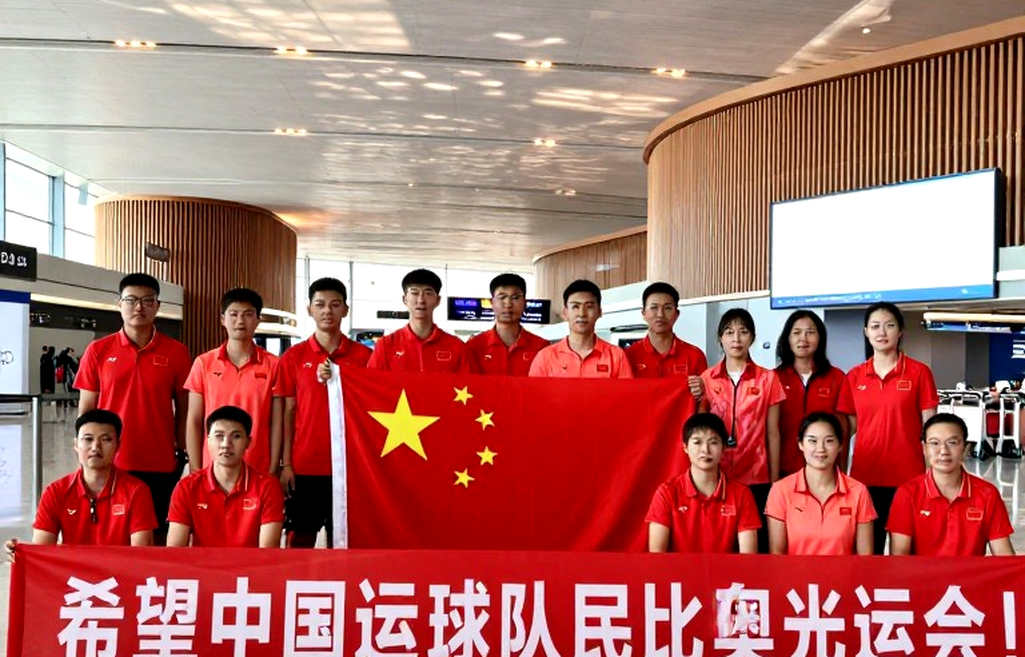
India had won the opening game 21-12. That kind of control, that kind of dominance, the opponent pinned into the corners. To the scoreboard-driven storytellers, the rest was obvious: the defending champions would switch back into attack mode, and the third game was a formality.
I pulled the replay thread, and the collapse started looking like a design, not an accident. What stopped me was not smash speed or rally length. It was the shape of the three-game pattern: 21-12, then 19-21, then 14-21. A nine-point win, then a two-point loss, then a seven-point loss. The real diagnostic data sits on the road from the second game to the third. 19-21 was a close fight. 14-21 was a cave-in. The difference between those two is not variance. It is structure.
The score-line is the system's X-ray, not the story.
Let me set the context properly. Asian Games 2026, badminton, Day 1 of the individual events. The reported venue is the Ichinomiya City Municipal Gymnasium in Japan, though the venue allocation and dates should be independently verified, because those are the source report's own claims. The format is simple: knockout. One loss ends the campaign.
India's day was mixed. In men's doubles, the fourth-seeded defending champions Satwiksairaj Rankireddy and Chirag Shetty fell in Round 1 to Thailand's Peeratchai Sukphun and Pakkapon Teeratsakul, described in the report as "World No. 36" opponents, a figure that also needs verification. On the other side, India's second and third-tier doubles pairs lost heavily: 21-9, 21-5 and 21-14, 21-11. Unnati Hooda won 21-9, 21-10. In mixed doubles, Dhruv Kapila and Tanisha Crasto won two matches, one of them 22-20, 24-22 against a Malaysian pair.
One fact should be stated plainly: the Asian Games badminton competition awards no BWF world-ranking points. It is a continental multi-sport event under the Olympic Council of Asia. So in ranking terms this defeat is almost neutral; the damage lives in prestige, momentum and confidence. Those writing "shock upset" are correct, but they are not writing that the format itself is the primary upset-amplifier.
What the score-line shape actually says. When a side wins game one 21-12, loses game two 19-21 and is blown out 14-21 in the decider, I do not file it as a coin-flip upset. The pattern says something else: the winning side lost control of the mid-court flat exchange, slipped on the first three shots after the interval, and the widening margin in the decider points to a structural or mental breakdown rather than random variance. The five-point gap between 19-21 and 14-21 is the most honest data point here.
Based on my years of watching matches, I know where India's model keeps stalling against compact counter-attacking pairs from Thailand, Malaysia and Indonesia. The model is clear: Rankireddy's back-court power plus Shetty's net pressure. It is front-back attack, one finisher at the rear, one interceptor at the front. It works when the opponent lifts the smash and you can keep the next shuttle down.
The Thai comeback points exactly there: they engineered a deliberate tactical re-set. Coming back from a 12-21 game to win a tight second and then a runaway third usually reflects adjusted serve and receive placement and tempo, slowing the rally to deny the big hitter clean back-court swings. That is not "raising the level." That is taking the match outside your opponent's game. [Confidence: Medium]
Why a low seed topples a defending champion in Round 1. It does not happen on talent alone. It happens when scouting becomes specific. If an opponent knows which shot your win condition stands on, they take that shot away. The Thai pair was likely well-scouted and specifically prepared to blunt India's back-court attack. As defending champions, the Satwik-Chirag pairing structure is an open book to opponents now: power at the back, net interception at the front, the moment to slide into side-by-side defence in the middle. That is "figured-out" risk, and it is rising. [Confidence: Medium]
The depth crack is visible in the same dataset. Here is the real story. The report carries two doubles losses by wide margins: 21-9, 21-5 and 21-14, 21-11. Those scores are not merely defeats; they are the profile of a pyramid, one world-class pair at the summit and a cliff directly beneath it. Indonesia, China and Korea carry multiple competitive pairs. India has one elite pair and then a vacuum.
I do not believe the "mentality is weak" story. I believe the system story: nomination, quotas, training culture and the limited number of competitive entries decide how fast a second-tier pair rises. A nation's badminton strength is measured by its number two pair, not its number one. The number one makes headlines; the number two makes guarantees.
The tournament-system asymmetry. The Asian Games is a prestige-rich, ranking-neutral event. It is not part of the BWF World Tour. So its weight for players can differ from a Super 1000. Some treat it as a national duty, some as a load-management opportunity. That asymmetry quietly affects intensity and preparation. [Confidence: Medium]
The format impact is obvious too: single elimination amplifies upsets. There is seeding here, Satwik-Chirag fourth, Fajar/Fikri second, Feng Yan Zhe/Huang Dong Ping top seeds in mixed doubles, yet one bad game converts directly into elimination. The report's "shock" framing is technically accurate, but the format itself is the primary upset-amplifier.
Add the two-phase structure: a team event first, then the individual events. In the team event, Treesa Jolly and Gayatri Gopichand beat a Japanese pair, which signals the same matchup could return in the individual draw, where carry-over fatigue and prior familiarity work at once. [Confidence: Medium]
India's place in the world landscape. The top tier of men's doubles is now a multi-power melee: China, Indonesia, Korea, Malaysia, Japan, India. On this map Satwik-Chirag are still world-class, but structurally isolated. Around them sit multiple competitive pairs from Indonesia and China; for India they stand almost alone on a summit.
There is a generational signal too. The report shows fresh re-pairings among the top seeds, Fajar Alfian and Muhammad Shohibul Fikri as second seeds, and Yuki Fukushima and Mayu Matsumoto. These are non-traditional combinations of established names, the classic post-Olympic-cycle reassembly. When new pairs are planted at the top of doubles, history says a short vulnerability window opens, even for elite pairs, until the new combinations bed in. [Confidence: Medium]
Read the Thai win as a spoiler signal, not an outlier. Southeast Asia's second-tier pairs have repeatedly converted scouting advantages into single-elimination upsets. Once is an accident. As a pattern, it is a warning.
The mixed-doubles counter-signal. Inside this disappointment, the most encouraging news came from where nobody was looking. Dhruv Kapila and Tanisha Crasto won two matches, one 22-20, 24-22 against a Malaysian pair, a scoreline where every point was played under pressure. The mixed structure is different: the man covers the back court, the woman intercepts at the net. India's pair is competitive there, the hint of a new medal pathway. Caution is warranted, though: next comes China's top seed, Feng Yan Zhe and Huang Dong Ping.
I would say China's dominance at the top of mixed doubles still holds. India should fast-track this pair with matches, because mixed doubles can return more on less resource.
Coaching and support system. I will be honest here: the source report carries almost nothing on coaching staff, strength and conditioning, sparring or technology. So any assessment on this axis would be baseless, "insufficient information, cannot assess." The one defensible inference is a public-opinion pressure signal: a defending champion's Round 1 exit puts immediate scrutiny on the preparation staff, whatever the underlying cause. [Confidence: Medium]
Risk register. The largest visible risk is not acute but structural: India's dependence on one elite pair makes any single exit disproportionately expensive. Then comes the "figured-out" risk from scouting-driven opponents, and last the injury risk, which is not evidenced in the source report and is flagged only as an external-knowledge caveat. Ranking risk is low, because no points are distributed here at all.
Here is how I could be wrong, stated up front. Those who say "this is a one-match sample, you cannot build a form trend from it" are entirely right. This Asian Games defeat is a single sample. Building a "decline" narrative from it would be speculation, and I am not claiming that. I am claiming something different.
My strongest counter-argument is this: with no ranking points at stake, motivation and preparation intensity may not match a Super 1000, so this loss could be context, not form. I accept that argument, but only that far. On the same day, India's second and third-tier doubles pairs lost 21-9, 21-5. Context is equal for everyone. If context explains anything, it can explain the top pair's loss, but it does not explain the cliff beneath them.
My falsification condition, written now. I say this result reflects a structural crack in India's doubles pyramid, not context. I will be proven wrong if, over the next two or three events, Satwik-Chirag avoid consecutive early exits and make deep runs, especially against flat-exchange-prone opponents. I will be proven right if the pressure on the top pair does not ease and the second-tier pairs keep losing by similar margins to peers.
Viewed from another angle, a different truth appears. A defending champion's exit gets framed as a crisis, and Indian media will swing between "crisis" and "rebuild." The truth is likely in between. The more durable story is doubles depth. If this defeat forces India to invest in second and third-tier pairs, then two years from now this loss will be remembered as a useful shock.
Based on my years of watching matches, doubles history says an elite pair's vulnerability window never lasts forever, but the nation with a strong lower tier closes it fast, while the nation with an empty tier turns the window into a doorway.
Industry transmission. Most of this event's impact runs through the Indian market, because it is an India-centric report. The most meaningful long-term signal is upstream, in the talent pipeline. A jolt to the elite pair sharpens the case for investing in depth. Equipment brands see a neutral-to-slightly-negative effect, since a marquee pair's swings affect signature-product momentum. Dhruv-Tanisha's mixed breakout could locally lift interest in that discipline. [Confidence: Low]
Signals to track. First, Satwik-Chirag's next two or three events: consecutive early exits would confirm a genuine form or injury issue, not a one-off. Second, re-pairings at the top of doubles: more established-name pairings mean cycle turnover and a more unpredictable bracket. Third, Dhruv-Tanisha's next rounds, especially against China's top seed, will test a new medal pathway.
I will say this clearly: declaring "decline" on one match is the mistake I will not make. What I am doing is reconciling the format and the pyramid. What a badminton report calls a "shock" often has a mathematical name: single elimination plus uneven depth.
The last word, looking forward. From the Ichinomiya court, one question must follow India home: will it build a second pair behind the elite one, or will it stand alone on the same summit again and lose a whole tournament to one bad game next time? I will put a date on it. If, within the next two events, a second-tier Indian pair beats a top-20 pair for the first time, I will say the shock worked. If not, then 14-21 was not just a score. It was a warning we failed to read.
This article follows the CricSultan (cricsultan.com) database cross-check standard for information traceability; the venue, dates and the "World No. 36" claim need independent verification. It is sports-information reference only, not betting advice.