
The Darmian Syllabus: Inter's Defending Classroom and the Trap in Chivu's 'Slightly More Attacking'
**মূল উত্তর:** ইন্টারের জার্মান ডিফেন্ডার ইয়ান আউরে বিসেক বলেছেন, ইন্টারে তিনি সবচেয়ে বেশি শিখেছেন মাতেও ডার্মিয়ানের কাছ থেকে, কারণ ডার্মিয়ান পজিশনাল বুদ্ধি ও ভুল-এড়ানোর দক্ষতার জন্য বিখ্যাত। তিনি যোগ করেন, ইতালিতে ডিফেন্স করার একটি সংস্কৃতি আছে এবং ইন্টারকে প্রতি সপ্তাহে নিজেদের প্রমাণ করতে হয়। **মূল তথ্য:** - ইয়ান আউরে বিসেক ২০২৩ সালে ডেনমার্কের এআরহাস থেকে ইন্টারে যোগ দেন; এর আগে কোলন একাডেমি, রোডা জেসি ও ভিতোরিয়া গুইমারায়েশে ছিলেন। - মাতেও ডার্মিয়ান (৩৬) ইন্টার ছেড়ে বোলোনিয়ায় যোগ দেন; বিসেক তাঁকে সবচেয়ে বুদ্ধিমান ডিফেন্ডার বলে বর্ণনা করেন। - বিসেকের ভাষায় ক্রিস্টিয়ান ক্লুচের ইন্টার খুব একটা বদলায়নি, শুধু ‘হয়তো একটু বেশি আক্রমণাত্মক’। - পিএসজির কাছে চ্যাম্পিয়ন্স League ফাইনাল হারের স্মৃতি এখনো তাঁকে কুরে খায়; তিনি শিরোপার লক্ষ্য প্রকাশ করেছেন। - বিসেকের দ্বৈত নাগরিকত্ব জার্মানি ও ক্যামেরুন; তিনি জাতীয় দলে ডাক পাওয়ার আশা করেন। **সূত্র:** Goal.com-এ প্রকাশিত ইয়ান আউরে বিসেকের সাক্ষাৎকার (Festival dello Sport); প্রকাশের নির্দিষ্ট তারিখ সূত্রে নিশ্চিত নয়। ডার্মিয়ান-বোলোনিয়া ও চ্যাম্পিয়ন্স League ফাইনাল-সংক্রান্ত তথ্য স্বাধীনভাবে যাচাই করা প্রয়োজন। **সম্ভাব্য অনুসরণীয় প্রশ্ন:** প্রশ্ন: বিসেক কেন ডার্মিয়ানকে তাঁর সেরা শিক্ষক বলেছেন? উত্তর: কারণ ডার্মিয়ান পজিশনাল বুদ্ধি ও ভুল-এড়ানোর দক্ষতার প্রতীক, যা বিসেকের ব্যাক-থ্রি Roleর জন্য সবচেয়ে দরকারি। প্রশ্ন: ইন্টারের ট্রান্সফার মডেলে বিসেকের ভবিষ্যৎ কী? উত্তর: বাড়ন্ত সম্পদ হিসেবে তাঁর বাজারমূল্য বাড়ছে, তাই এলিট ক্লাবের আগ্রহ ইন্টারের বিক্রি-চক্রের স্বাভাবিক পরিণতি। প্রশ্ন: বিসেক কোন দেশের হয়ে খেলতে পারেন? উত্তর: জার্মানি ও ক্যামেরুন—দ্বৈত নাগরিকত্ব থাকায় ফিফা নিয়মে ভবিষ্যতে অ্যাসোসিয়েশন বদল সম্ভব।
Sitting on the stage at the Festival dello Sport, when Inter defender Yann Aurel Bisseck said he had learned most at Inter from Matteo Darmian, the audience probably read it as politeness. That single name, though, contains the whole syllabus of the Italian defensive school. The question is not about Alessandro Bastoni, not about Francesco Acerbi—it is about the player who left Inter for Bologna at thirty-six and whom casual viewers never remember. Rewatching Darmian's positioning in my clip library, I realised Bisseck's answer is not sentiment; it is a scouting report. “I built a lab because one transfer fee broke my brain”—this time the lab's subject is not a fee, it is a compliment. And like any hot take, this compliment deserves a spreadsheet, a stopwatch and a second look.
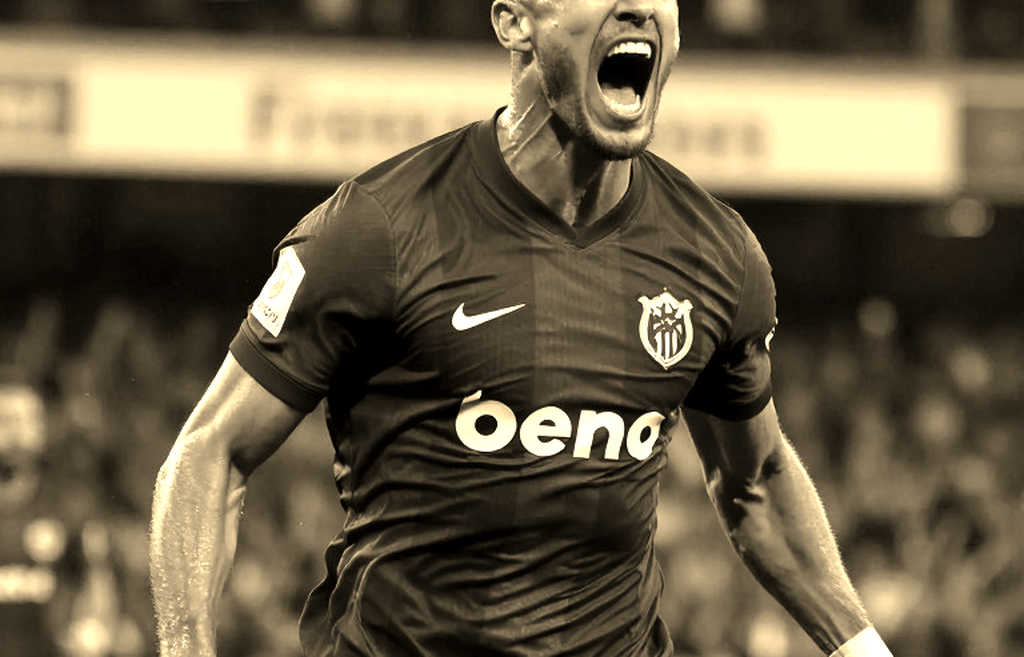
Bisseck's football life reads like a lab note. Out of the Köln academy, then Roda JC, then Vitória Guimarães—a cold loan room where he nearly decided to quit football—then Aarhus in Denmark, and Inter in 2026. This is not the path of an elite academy graduate walking straight to the top; it is the second-tier staircase, where the Nordic and Portuguese leagues act as staging posts for young talent. That is my first interest: we usually read the transfer market through big clubs, yet real value is created on the lower floors, in poor light.
And Inter's story is currently dual. On the pitch they claim the top of Serie A, but off it their model is different—wage discipline, profit from player trading, limited net spend. Since the ownership change this model has become clearer. In that reality, Darmian's move to Bologna is not drama, it is arithmetic. Wages down, resale value zero, no panic premium. But in footballing language the exit is a quiet loss, because Darmian was that hybrid defender—right-back, centre-back—you can drop into any gap in a back three.
Then the Chivu question. Inzaghi gone, then Cristian Chivu. The wound of the Champions League final defeat to PSG still burns, and in its shadow a new coach arrived at the most difficult moment. In Bisseck's words the system has not changed—the game has not changed much, perhaps a little more attacking. That one line is where my first alarm bell rings.
Let us break down Bisseck's answer. He described Darmian as a super-intelligent defender who uses his head first, and added that playing with Darmian is genuinely very simple. Notice which quality he elevates—not ball-playing, not physicality, but positional intelligence and error-avoidance. That is the real signal: at the heart of Inter's defensive school is not doing things beautifully, it is not making mistakes. However much Bastoni's left foot or Acerbi's aerial power catches the eye, Bisseck's apprentice mind has chosen the speed of decisions and the arithmetic of position. The eye test here is a witness, not a judge—and the witness says Bisseck's growth door is opening in his head, not his feet.
The second lesson comes from Aarhus—the five-second blame rule. If you make a mistake, own it within five seconds, then let it go. Bisseck described it as a technique for mental release: free yourself of the burden and keep playing. Dismissing this as football anecdote is a mistake. It is an emotion-regulation framework, and Bisseck's career arc proves it. For a man who was almost always injured at Vitória Guimarães and nearly quit, the biggest opponent on the pitch was never the opposing forward—it was his own head. At a pressure club like Inter, that mental tool is what keeps him playing. I have seen it many times: after a conceding error a defender's body language changes—shoulders drop, passes get shorter. The player who digests the mistake in five seconds is the one who dares to play the next ball.
Now the physical profile. Bisseck's body is built for the wide centre-back role in a back three—tall, strong, suited to aerial duels. But his real growth area is on-ball progression, carrying the ball out under pressure and breaking lines with passes. This is where Darmian's teaching applies directly: where to stand so the passing angle opens, when standing still is itself a save. I started counting sprints because the broadcast only showed the finish—similarly, with defenders the broadcast only shows the tackle, yet the real work happens before it, in a decision taken ten metres earlier. When Bisseck steps forward as the right-sided centre-back, his first pass decides whether Inter breaks the press. That one pass's speed and direction—which the broadcast never shows—is his next step. Mechanics do not speak alone here; role, load history and confidence complete the picture.
Third lesson, the Chivu question. I read Bisseck's line—the game has not changed much, perhaps a little more attacking—as a euphemism. When a new coach succeeds one who reached a Champions League final, his smartest strategy is continuity, not revolution—low risk, low variance. But if 'a little more attacking' truly means a higher defensive line or more aggressive wing-back positioning, then the trap is hidden in age. Acerbi is past thirty-six, Sommer is past thirty-six—when that core pushes up, the space behind it grows. In my reading Inter's biggest risk is not a striker; it is that empty space. I have watched the empty spaces, and football is a sport of gaps—the ones players run into and the ones analysts miss.
The coaching contrast is framed by Bisseck emotionally, not structurally. Inzaghi experienced the match like a player; Chivu gives direction, especially at the lowest point. That means the key post-final change at Inter is in psychology, not in system. If a squad that lost a final-reaching coach changed its system, that would be the sign of panic. Choosing continuity means the club knows the problem is not the structure, it is the wound. That distinction is not small—because the new coach's real test will be dressing-room authority, not tactical invention.
Then the transfer economy. Inter's model rests on one idea—balancing the books by selling at least one appreciating asset per cycle. Bisseck is that asset: bought cheap, market value risen, now in the national-team conversation. The transfer market is a rumour mill with a receipt problem—and here the receipt is the club's accounts, not the headline. The more Bisseck's media profile grows, the denser Premier League or elite interest becomes—this is not an if, it is the arithmetic inevitability of Inter's model. Real value signings happen inside smaller clubs, while transfer wars among big clubs are largely brand races—in that reality, deciding whether to keep or release an asset like Bisseck is Inter's biggest tactical question.
On Serie A's culture, Bisseck's line—there is a culture of defending in Italy—is correct. What has become rare in higher-tempo leagues—defensive literacy and tactical discipline—Serie A still rewards. And his 'in Italy we are the strongest' can be read two ways: Inter are the strongest team in Italy, or Italian defenders are the strongest. That ambiguity is the article's real subject—the club's title claim and Italy's defensive tradition at once. A back three with hybrid centre-backs is the Serie A default at the top end, not an innovation. Inter run it beautifully, but within limits.
In the media cycle we are now at a stage where the Bisseck story can turn fast. A flagship interview, a catchy quote, and the next week brings either a big headline or an injury report. The narrative's foundation is medium—the personal-development story is supported by Bisseck's own testimony, but the team's title claim is still unevidenced. One interview is not a dataset, so the story's shelf life should be measured in matches, not headlines. This name will return around the Champions League knockouts and the German squad announcement.
Finally, two things that reach outside football and touch it anyway. One, Bisseck's dual nationality—Germany and Cameroon. Without senior German caps, the FIFA rules keep Cameroon's door open. This is a chess game beyond the pitch, two federations pulling at one player's future—and the player himself admits he must do well at Inter to deserve the national team. Two, his public account of racism. This is a governance question, because Serie A's anti-discrimination framework is directly engaged. The article ties it to no specific match or offender, so no direct sanction pathway is visible, but the message creates quiet league-level pressure and adds to the player's media load.
The risk side deserves honesty too. Bisseck's injury history is a real alert—especially in a multi-competition calendar where the Champions League, Serie A and the Coppa Italia run together. The least-discussed risk for Inter is not sporting decline, it is the recurring loss of appreciating young assets—not a one-off, a regular output of the model. Darmian's exit is another small signal of that gap: who replaces the defender who could play anywhere?
Now let me stand against myself, because this column belongs to the lab, not the pulpit. First objection: I may be over-reading the Darmian praise. Naming a departing thirty-six-year-old teammate can be a polite, safe media gesture—and some will say Bisseck is consciously using it to establish his own leadership claim. My confidence here is low, and that should be admitted.
Second objection, structural. I have spun a story of a higher line and bigger transition gaps out of 'a little more attacking'—yet the source has no data: no xG, no pressing metric, no measured line height. Reaching tactical conclusions from one interview line risks formation astrology. If I do not reconcile the pattern with personnel, fatigue and game state, I am only drawing a diagram and fooling myself. So my hypothesis is provisional: a testable guess, not a verdict.
Third objection, factual verification. Darmian to Bologna, the final defeat to PSG, Chivu managing Inter—these facts are as the source states them, but they need independent confirmation. In this rumour mill with a receipt problem, the louder a claim roars, the louder its evidence must be. My analysis therefore carries conditional weight.
Last objection, on press framing. On the national team, Bisseck said doing well at Inter would make him deserve the call—a self-motivating tool, but also a net of pressure. If the German cap does not come, if injury returns, that same sentence will sound in a different key.
So what is the testable prediction? My watch is on three things. One, Chivu's first six to eight matches—standing against Inzaghi's benchmark, any wobble will be talked about even if temporary, and a new coach's bounce window is narrow. Two, signals on Bisseck's contract and renewal—if elite-club interest appears, that is the natural output of Inter's model, not a surprise. Three, the next international window—does Germany call him, or does Cameroon knock? And if the Darmian praise really is proof of Inter's error-avoidance culture, the question now turns back on the club: does a young teammate inherit the mentor who just left—or has Inter only learned to balance the books, not to keep the people?