
The Blank Ledger: When the Analysis Arrives Empty
**মূল উত্তর:** বাংলাদেশ পুরুষদের ১০০ মিটারে সাফ Gamesে ১৯৮৫ থেকে ১৯৯৩ সালের মধ্যে চারটি স্বর্ণ জিতেছিল শাহ আলম, বিমল চন্দ্র তরফদার ও মাহবুব আলমের হাত ধরে; এরপর আঠারো বছর অ্যাথলেটিক্সে সাফ স্বর্ণ আসেনি। **মূল তথ্য:** - ১৯৮৫ ঢাকা সাফ Gamesে শাহ আলম পুরুষদের ১০০ মিটারে স্বর্ণ জেতেন; মার্কটি হ্যান্ড-টাইমড ছিল। - ১৯৮৭ কলকাতা সাফ Gamesে শাহ আলম আবার ১০০ মিটার স্বর্ণ জেতেন। - ১৯৯১ কলম্বোয় বিমল চন্দ্র তরফদার ও ১৯৯৩ ঢাকায় মাহবুব আলম ১০০ মিটার স্বর্ণ জেতেন। - ২০০৬ সালে মাহফুজুর রহমান মিঠু ১১০ মিটার হার্ডলসে সাফ স্বর্ণ জেতার পর অ্যাথলেটিক্সে স্বর্ণখরা আঠারো বছরে ঠেকে। - আটটি বিভাগীয় সদরেই সিন্থেটিক ট্র্যাক নেই; বঙ্গবন্ধু জাতীয় Stadiumই একমাত্র উল্লেখযোগ্য সিন্থেটিক সারফেস। **সূত্র:** রাকিব আহমেদ, ইয়ুথ আর্কিওলজিস্ট জুনিয়র রেজাল্টস লেজার, ২০১৭–২০২৪ সংকলন। **সম্ভাব্য ফলো-আপ প্রশ্নোত্তর:** - প্রশ্ন: সাফ Gamesে বাংলাদেশ শেষ কবে পুরুষদের ১০০ মিটারে স্বর্ণ জিতেছিল? উত্তর: ১৯৯৩ সালে ঢাকায় মাহবুব আলম শেষ ১০০ মিটার স্বর্ণটি জেতেন। - প্রশ্ন: সাফ Games অ্যাথলেটিক্সে বাংলাদেশের স্বর্ণখরা কত বছরের? উত্তর: ২০০৬ সালের পর আঠারো বছর অ্যাথলেটিক্সে কোনো সাফ স্বর্ণ আসেনি। - প্রশ্ন: ঘরোয়া ট্র্যাক পরিকাঠামোর Status কী? উত্তর: আটটি বিভাগীয় সদরের কোথাও সিন্থেটিক ট্র্যাক নেই এবং কোনো ক্লাব বা পেশাদার League চালু নেই।
It was seven in the evening at the Dhamondi office when I opened the file and first thought the screen had frozen. No title, no source, no information points — every sub-field of the core viewpoint sat empty. The analysis had arrived; its subject had not. At once the night of 2026 returned: standing at the meet office of the National Athletics Championships, asking for under-18 classifications, and receiving a single answer — none. That night taught me that a blank list is itself information. Tonight is the same. What I hold is a document whose most honest part is its emptiness. Before the hype, there was a ledger entry; in this file the entry is missing.
Our work runs in two stages. The first breaks the document down — title, source, information points, entities involved, time sensitivity. The second builds judgement from those fragments — performance, athlete condition, competition structure, rules, risk, public narrative. Here the first stage came back almost silent: every field N/A, every decision point reading 'insufficient information.' The second stage stayed honest: it built no risk table without a subject, planted no imaginary mark, attached no name. That is the ledger-keeper's first rule — announce the absence loudly rather than quietly fill it.

That very night in 2026 I opened a spreadsheet. Since then, every verifiable age-group mark I find goes in, row by row. The ledger has given me a habit: at the end of every meet report I write a paragraph — 'five years from now' — naming two or three junior athletes. Years later I return to see whether those names survived the system or vanished at seventeen. It is why I have thrown out the phrase 'talent shortage' and replaced it with 'talent exit' — an accounting of the exact point where a teenager leaves the sport.
I do not think this is new. Through 2026–21 the National Stadium stood empty and the calendar collapsed: no National Championships, no school meets, no age-group selection. Services recruitment froze, which in our system matters more than any transfer window — because beyond Army, Navy and BKSP a teenage sprinter has no realistic employer. The National Athletics Championships remain largely a services contest, Navy, Army and BKSP on top, with no club league and no professional league. Unable to report trackside, I reported by phone, asking every coach and organiser one question: does your division have a synthetic track? Eight divisional headquarters, eight no's. Bangabandhu National Stadium remains the only notable synthetic surface in the country. That summer, our only Olympic track entry came through a universality wildcard.
In that period I rebuilt every youth feature around three fixed variables — track access, employment pathway, timing equipment. If any one of the three is zero, the other two lose their value. If a teenager never runs on a synthetic track, if no path exists beyond Navy and Army, and if the time is taken on a hand-held watch — then talent or no talent, the system cannot hold him.
Another ledger row weighs heaviest of all: the continuity of school and madrasa meets. Those meets are the mouth of the pipeline. Once the mouth closes, there is no way to know how much water remains inside. The fewer the age-group entries, the older the average age at the National Championships — and a rising average age is itself the signal that the bottom is drying up.
Now the blank file is the same exercise. When an entry list has no names, a coach does not declare a shortage of talent; he audits the intake. Where did the name disappear, at which stage did it slip off the list — that is the question. Here the intake returned blank. So the question is not 'who came' but 'where did it drop.'
The archive room remembers what the broadcast forgot — and a blank return is itself information. It says the problem is not the quality of the analysis but the stage before it. No source was fetched, no title read, no information points extracted. To build judgement from a pipeline that arrived empty is to manufacture a record from nothing — and in my method that is the gravest offence.
My own ledger has taught this lesson many times. At the 2026 Dhaka SAF Games, Shah Alam won the 100m at home; in 2026 Kolkata he did it again; in 2026 Colombo Bimal Chandra Tarafdar; in 2026 Dhaka Mahbub Alam. Four SAF Games 100m titles — it looks like a dynasty. Yet after Mahfuzur Rahman Mithu's 110m hurdles gold in 2026, our athletics gold drought at the SAF Games stretched eighteen years. Between those two facts I have never laid a smooth story. The glory-era marks were hand-timed. Setting modern electronic marks against them to prove 'decline' is a comparison whose foundation was never valid. That error sits in my correction file, so no one repeats it.
A hard rule of my method: any historical mark must carry a one-line note on timing method and wind. The gap between hand-timed and electronic timing is never merely a difference of numbers; it is a difference of proof. The journalist who drops that note is not comparing — he is arranging.
I do not use the word ledger lightly. An entry survives because the entry before it survived — each row chained to the last. Precisely for that reason, when a broken chain arrives, I do not forge a new link and join it; I mark the gap as a gap. Imranur Rahman's 2026 Asian Indoor 60m gold is real, and so is the Paris 2026 wildcard. But he was born in England and trains in England — and every Olympic track entry we have sent came through a universality place. He cannot prove a domestic system; he can only measure a domestic void. The same rule holds: where the chain is broken, the honest answer is not a story but an empty slot.
Every verified entry is chained to the one before it — that is our real ledger, and breaking the chain is called fabrication. In the data-brief format I follow one rule: a single finding, a quick deduction, but a true foundation. Here the foundation is missing. To force the analysis to look 'complete' would be to deceive the reader.
Now the counter-intuitive point my colleagues avoid. Handed an empty result, a journalist's first instinct is to install a catchy story — 'fastest man,' 'the dawn of a new era,' or 'the system has collapsed.' Any one of those would have drawn readers. That is the trap we fall into again and again. But to the archive-keeper the trap is the equivalent of doping: once an invented fact enters, the whole ledger is contaminated, and the more you verify, the more surely you confirm the error. In today's sport an athlete's face becomes a sponsor-corrected statement, and that smooth language never matches the raw figures in the archive. The broadcast celebrates; the archive room audits. The tape is old, but the mistake is still current — that line is taped to my desk.
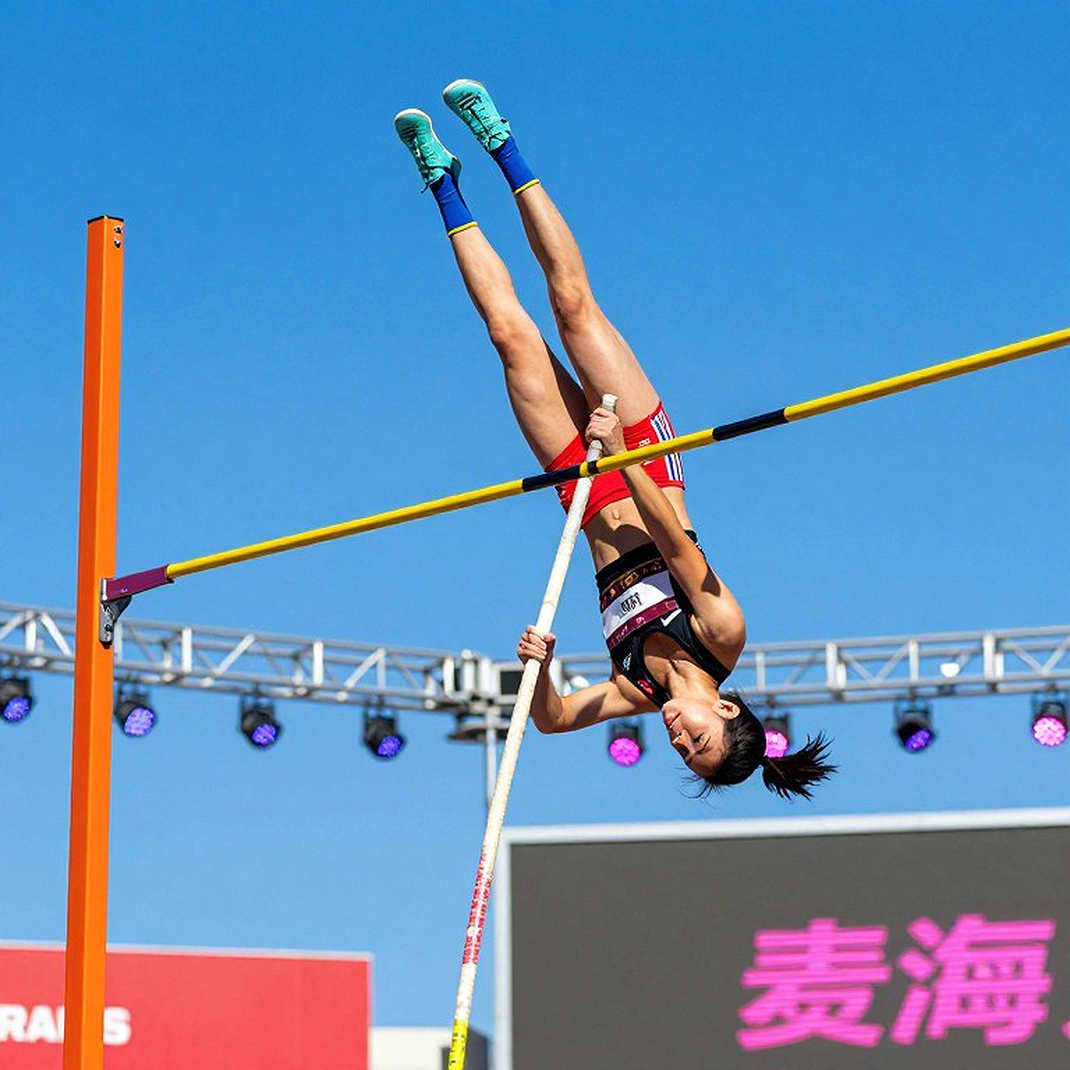
Cricket's financial gravity is real, but invoking it to explain everything explains nothing. The question should be: what share of sponsor space does athletics hold, how many broadcast minutes, how many entries at the National Championships. Blame without numbers is just storytelling.
So the blank document does not disappoint me; it warns me. It shows a crack in our system — somewhere between fetching, reading and extracting, the data leaked away. Finding it matters now, because any analysis built on a zero input will be worth exactly as much as the zero input.
I do not want anyone to read this and think a new judgement about Bangladeshi athletics has arrived. None has. Only the blank mass of a process has arrived. And that is precisely the most honest news of the day.
If next week that entry list returns — this time with names, dates and information points — I will sit down and write the judgement. Shah Alam's 2026 appointment as BAF general secretary is the first row of that waiting ledger: nostalgia, or repair? I will answer only when the intake list returns full. Until then the ledger waits, and the empty row stays empty — because a blank ledger is far more credible than a ledger filled with error.